

For Washington property owners, the modern pest control toolbox means smart traps, digital monitoring portals, and data-driven prevention strategies that stop infestations before they start. Without these tools, pest programs rely on reactive treatments that miss early activity, generate higher long-term costs, and leave multi-site portfolios without the visibility they need to stay ahead of risk.
If your pest control program is still operating on a fixed spray schedule and a handwritten service log, you’re accepting risks that a modern pest control program would have caught weeks earlier.
The landscape of commercial pest management has shifted fundamentally over the past decade. Smart pest monitoring technology, real-time reporting platforms, and data-driven pest control strategies have transformed what’s possible for property owners and managers who want to stay ahead of infestations rather than respond to them after the damage is done.
For Washington property owners navigating the moisture-rich climate that makes the Pacific Northwest one of the most pest-active regions in the country, this shift is essential.
Let’s look at what the modern pest control toolbox actually contains, how the technology works in practice, and what it means for properties managing large or geographically distributed portfolios.
Table of Contents
What Are Smart Traps and Monitoring Tools, and How Do They Work in Commercial Settings?
Smart pest monitoring is a fundamental departure from the traditional model of pest control, where a technician visits a property on a scheduled basis, inspects placement devices, records findings on paper, and treats based on what was found at that single point in time.
The limitation of that model is embedded in its design: it provides a snapshot of pest activity at the moment of the visit, with no visibility into what happened in the days or weeks between visits.
Smart traps and electronic monitoring devices change this by generating continuous data. These devices, deployed in the same high-activity zones where traditional traps would be placed, such as mechanical rooms, kitchen areas, loading docks, utility corridors, and waste handling areas, are equipped with sensors that detect and record activity in real time.
When a rodent enters a smart trap, when an insect monitoring station registers a capture, or when environmental sensors detect conditions associated with increased pest risk, the event is logged automatically and transmitted to a centralized data platform.
The practical effect is continuous surveillance rather than periodic inspection. You no longer have to wait for a scheduled visit to know that activity has increased in a specific area of the building. The monitoring system surfaces that information immediately, enabling a targeted response before a localized pest presence becomes a building-wide infestation.
For commercial pest management in WA, where rodent pressure increases significantly during the wet season, and moisture-driven insect activity is a year-round concern, this continuous visibility is a material operational advantage.
The buildings and campuses that rely on smart pest monitoring are preventing the conditions that allow those problems to develop in the first place.
How Do Digital Reporting Portals Give Property Managers Actionable Pest Intelligence?
Smart monitoring hardware generates value only when the data it produces is accessible, interpretable, and actionable. This is where digital reporting portals become the operational backbone of a modern pest control program.
Rather than receiving a paper service report after a quarterly visit, you have a live view of pest activity across your entire property or portfolio at any time, from any device.
A well-designed reporting portal aggregates activity trends over time, flags anomalies that warrant attention, maps activity locations against building floor plans or site maps, and provides documentation that supports compliance and audit requirements.
For properties operating in regulated industries, like food processing, healthcare, hospitality, or multi-family housing subject to health code requirements, this documentation infrastructure is a compliance necessity.
The data layer also enables a fundamentally different conversation between pest control providers and their clients. Rather than a technician reporting anecdotally that “activity looked light this month,” a data-driven pest control program produces trend charts, heat maps, and comparative reports that allow you to see exactly how your buildings are performing over time, where risk is concentrated, and whether the program is delivering measurable results.
Real-World Example
A hospitality group operating four hotel properties across Western Washington contacted us after a routine health inspection at one of its Seattle-area locations flagged evidence of rodent activity near a food storage area.
The group had been operating under a traditional quarterly pest control program with no between-visit monitoring. We deployed smart trap arrays at all four properties and connected them to a centralized reporting portal accessible to the group’s regional facilities director.
Within the first 60 days, the portal identified elevated rodent activity at a second property that had shown no visible evidence during the prior quarterly visit. We dispatched a targeted treatment response before the activity escalated to a reportable level.
The facilities director reported that the ability to see activity data across all four properties from a single dashboard fundamentally changed how their team managed pest risk, shifting from a reactive posture to one grounded in real-time intelligence.
How Does Data Actually Reduce Pest Infestations in Commercial Properties?
The mechanism by which data reduces infestations is straightforward: early detection enables early intervention, and early intervention prevents the exponential population growth that defines a full infestation.
Pest populations, whether rodents, cockroaches, bed bugs, or stored product insects, follow predictable growth curves. Catching activity at the beginning of that curve requires dramatically less intervention than catching it after the population has established.
Data-driven pest control operationalizes this principle by replacing assumption with evidence. Instead of treating a property on a fixed schedule because “that’s when we come,” a data-driven program treats a property when and where the monitoring data shows activity that warrants a response.
This precision has two important effects: it reduces unnecessary chemical applications in areas where no activity is occurring, and it concentrates treatment resources exactly where they are needed most.
Over time, the data layer also enables trend analysis that informs structural and behavioral prevention recommendations. If monitoring data shows that rodent activity consistently spikes in a specific mechanical room during October and November, that pattern points toward a seasonal entry point that can be investigated and sealed.
If insect activity in a food service area correlates with specific delivery schedules, that correlation suggests a supply chain inspection protocol that can eliminate the introduction pathway. These insights are invisible to a reactive, calendar-based pest program and fully visible to a data-driven one.
The following represents the core data inputs that a mature modern pest control program tracks and analyzes to drive prevention outcomes:
- Trap capture events by device, location, and time, enabling hotspot identification and trend analysis across service periods
- Environmental sensor readings, including temperature, humidity, and moisture levels, correlated with pest activity thresholds
- Treatment application records linked to monitoring data, enabling outcome measurement and program refinement over time
- Entry point and harborage inspection findings from technician visits, integrated with monitoring data to build a complete facility risk profile
- Comparative benchmarks across similar property types or portfolio locations, enabling performance evaluation against relevant peer groups
The cumulative effect of this data infrastructure is a modern pest control program that gets more effective over time, not just more efficient. A distinction that matters significantly for properties with long-term asset management objectives.
Why Is Modern Pest Control Especially Valuable for Large Portfolio Property Groups?
The advantages of data-driven pest control scale with portfolio complexity.
For property groups managing assets across multiple buildings or cities, the limitations of a traditional pest control model become acute: inconsistent service standards across providers, no cross-portfolio visibility into activity trends, fragmented compliance documentation, and no mechanism for identifying systemic issues that manifest differently at different locations but share a common root cause.
Modern pest control addresses all of these limitations directly. A portfolio-wide deployment of smart pest monitoring, connected to a unified reporting platform and managed by a single provider, gives you something that has historically been unavailable: a standardized, comparable view of pest risk across every asset in the portfolio, regardless of geography.
This visibility has strategic value beyond day-to-day pest management. Portfolio-level pest data informs capital planning decisions, identifying buildings with persistent structural vulnerabilities that are driving recurring activity, and supports due diligence processes for acquisitions or dispositions where pest history is a material factor in asset valuation.
For large commercial real estate operators, the pest management data layer is becoming part of the broader facility intelligence infrastructure that informs asset management decisions at the highest level.
Real-World Example
A retail property management group with 23 locations across Washington connected with Fikes to standardize pest management across its portfolio after a compliance audit revealed inconsistent documentation practices and two locations with unresolved rodent activity that had persisted through multiple service cycles.
We conducted baseline assessments at all 23 locations, deployed smart monitoring arrays at high-risk sites, and connected the full portfolio to a unified reporting portal with role-based access for regional managers and corporate facilities staff.
Within the first program year, we identified a recurring entry point pattern at six locations sharing a common building vintage and structural design, a finding that would’ve been invisible without cross-portfolio data analysis.
A targeted exclusion program addressing the shared vulnerability reduced active rodent captures across those six sites by over 80% within 90 days. The corporate facilities director credited the portfolio-wide data view as the capability that made the systemic fix possible.
When evaluating pest control providers, the ability to deliver this kind of portfolio-level service with consistent standards, unified reporting, and national operational reach is now a meaningful differentiator that directly affects the total cost of pest management and the quality of the outcome it delivers.
How Does a Reactive Pest Control Approach Compare to a Modern Pest Control Program?
The differences between a reactive, traditional pest control program and a modern, data-driven approach are significant across every dimension that matters to a commercial property manager. The table below provides a direct comparison.
| Factor | Reactive / Traditional Approach | Data-Driven Modern Pest Control |
| Detection Speed | Pest activity identified only after visible evidence or complaints | Activity detected at first sign via continuous smart trap monitoring |
| Treatment Timing | Scheduled at fixed intervals regardless of actual activity levels | Triggered by real-time data; applied precisely when and where needed |
| Chemical Usage | Broad-spectrum applications on a routine calendar basis | Targeted, reduced-volume treatments based on confirmed activity zones |
| Reporting Visibility | Paper logs or periodic verbal updates from technician | Digital dashboards with real-time data accessible to property management |
| Multi-Site Coordination | Siloed; each site managed independently with no cross-property trend analysis | Portfolio-wide view; trends identified and addressed across all locations |
| Compliance Documentation | Manual and inconsistent; difficult to audit or share with regulators | Automated; complete digital records available for audits and reporting |
| Cost Over Time | Higher due to infestation events, remediation, and reactive treatments | Lower; prevention reduces emergency interventions and service escalations |
Ultimately, modern pest control shifts the program from a reactive cost center into a managed, intelligence-driven function that delivers measurably better outcomes at a lower long-term cost.
How Does Fikes Deliver Modern Pest Control Capabilities for Washington Properties?
Fikes has built its pest management practice around the tools, technology, and operational infrastructure that commercial property owners and managers in Washington to stay ahead of pest risk in a region that demands year-round vigilance.
We occupy a position that most pest control providers in the market can’t match: the local expertise and responsiveness of a regional operator combined with the systems, technology, and multi-property coordination capability of a national organization.
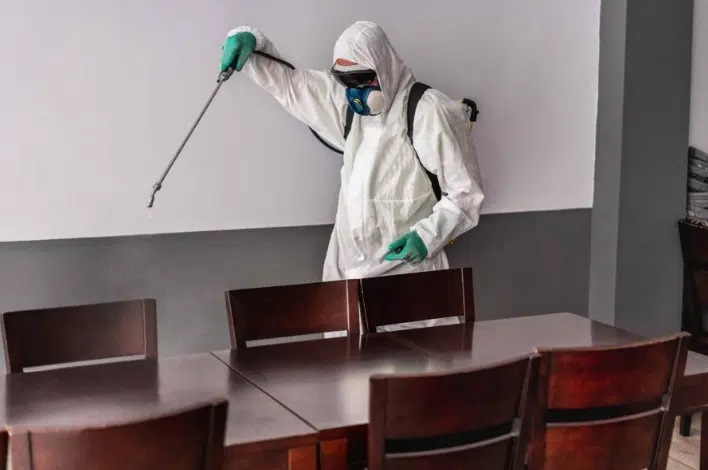
Our pest management programs are built on smart pest monitoring deployment, digital reporting platforms, and data-driven service protocols that are customized to the specific risk profile of each property.
Every program starts with a thorough facility assessment that maps entry points, harborage zones, activity patterns, and environmental risk factors, producing a baseline that informs monitoring placement, treatment strategy, and service frequency.
For Washington properties, where moisture management and seasonal rodent pressure are persistent variables, this baseline assessment is the foundation of a program that performs reliably across changing conditions.
The Fikes client portal gives property managers and facilities teams real-time access to monitoring data, service records, trend analysis, and compliance documentation across all of their locations.
We also bring the integrated facility services capability that property managers increasingly value in a primary vendor relationship.
Pest management, restroom sanitation, trash chute cleaning, floor care, and facility product supply, managed through a single provider relationship, eliminates the coordination overhead of managing multiple specialized vendors and ensures that the hygiene and maintenance practices across a property are working together rather than in isolation.
For Washington property owners evaluating whether their current pest control program is genuinely delivering on the capabilities that modern pest control makes possible, we offer an assessment process that benchmarks the existing program against current technology and service standards and provides a clear, honest picture of where gaps exist and what closing them would require.
Why Is Upgrading to a Data-Driven Pest Control Strategy the Right Move?
The gap between reactive pest control and modern pest control has never been wider. And the consequences of staying on the wrong side of that gap have never been more visible.
Washington’s climate, regulatory environment, and competitive commercial real estate market all favor property owners who invest in the tools and programs that keep their assets clean, compliant, and free of the reputational and operational damage that pest activity causes.
Smart pest monitoring, digital reporting portals, and data-driven prevention strategies are proven, commercially mature capabilities that leading property management organizations are already deploying across their portfolios.
A pest control program that relies on scheduled visits, paper logs, and reactive treatment is leaving early-detection value on the table every day it operates. The cost of that gap is measured in infestations that could’ve been prevented, compliance events that could’ve been avoided, and resident or tenant experiences that could’ve been protected.
Modern pest control is the current standard for any commercial property management organization that takes pest risk seriously. And in Washington, taking pest risk seriously is simply part of responsible property ownership.
Book a facility assessment with us today and learn how our smart monitoring technology, data-driven protocols, and multi-property service capability can protect your Washington properties.