

For Colorado property owners and managers, the cost of dirty trash chutes goes far beyond a bad smell. Neglecting regular multi-family trash chute cleaning leads to pest infestations, fire hazards, damaging online reviews, increased resident turnover, and measurable declines in property value, making routine chute maintenance one of the highest-return investments in building upkeep.
Your prospective residents are checking Google reviews before they ever set foot in your leasing office. And what they find there can cost you a signed lease before the tour even begins.
For multi-family property owners and managers across Colorado, trash chute maintenance ranks among the most underestimated line items in a building’s operational budget.
The chute gets used dozens of times a day, every day, by every resident in the building. And when it’s not cleaned on a regular, structured schedule, the consequences compound quietly until they become very loud in the form of odor complaints, pest sightings, scathing online reviews, and residents who choose not to renew their leases.
The cost of dirty trash chutes is a revenue problem, a reputation problem, and ultimately a property value problem.
Let’s talk about the true cost of dirty trash chutes and what a well-maintained one protects.
Table of Contents
How Do Dirty Trash Chutes Affect Resident Satisfaction and Retention?
Residents in multi-family buildings have a clear and consistent set of expectations: clean common areas, responsive maintenance, and a living environment that feels well cared for.
Trash chutes sit at the intersection of all three. When a chute is neglected, the impact is immediate and personal. Odors travel through chute doors on every floor, pests find their way into shared spaces, and residents begin to question whether management is paying attention to the building at all.
The connection between property hygiene in CO and lease renewal rates is well established among experienced property managers. Residents rarely cite a single reason for non-renewal, but maintenance neglect and the sensory evidence of it consistently appears near the top of resident surveys when buildings experience above-average turnover.
A resident who smells a foul odor every time they walk past the trash chute room on their floor is a resident who is mentally calculating whether the inconvenience of moving is worth escaping the inconvenience of staying.
The financial math on turnover is sobering. Between vacancy loss, unit make-ready costs, leasing commissions, and the time investment of the leasing process itself, a single unit turnover in a Colorado apartment community can easily cost a property manager several thousand dollars.
Multiply that by three, five, or ten units in a building where maintenance complaints have gone unaddressed, and the cost of dirty trash chutes becomes starkly apparent.
Regular multi-family trash chute cleaning is a resident retention strategy. A building that smells clean and feels well-maintained communicates to residents that management values their experience, and residents who feel valued are far more likely to renew.
What Role Do Odors and Pests Play in Negative Online Reviews?
The relationship between property hygiene and online reputation has never been more direct.
Platforms like Google, Yelp, and ApartmentRatings give residents a public voice, and complaints about odors and pests are among the most commonly cited issues in negative multi-family property reviews.
These reviews are permanent, publicly visible, and actively consulted by prospective residents who are comparison-shopping properties across a market.
A neglected trash chute creates the exact conditions that generate these reviews. Organic waste buildup inside the chute shaft produces sulfur compounds, ammonia, and other volatile organic compounds that migrate outward into trash rooms, elevator lobbies, and hallways.
Residents who encounter these odors regularly are primed to document and share the experience. A single one-star review mentioning “permanent garbage smell in the hallways” or “rodents near the trash area” can meaningfully depress a property’s overall rating and deter prospective residents for months or years after the underlying problem has been corrected.
Pest infestations compound the review risk considerably. Cockroaches, fruit flies, and rodents are all attracted to the decomposing organic matter that accumulates in an uncleaned chute shaft.
Once established, these pests migrate beyond the chute room into resident units, a development that generates not just negative reviews but formal complaints to building management, requests for rent abatement, and in some cases, involvement from local health or code enforcement authorities.
Real-World Example
A 180-unit mid-rise in the Denver metro area contacted Fikes after its Google rating had slipped from 4.2 to 3.6 stars over 18 months, with multiple recent reviews specifically referencing odors near the trash chute areas on upper floors.
We conducted an initial deep-clean service on the building’s two chute systems, removing years of accumulated grease, debris, and biofilm from the shaft walls, intake doors, and collection rooms.
We then established a quarterly maintenance program with interim deodorization treatments between service visits. Within six months of the program launch, new resident reviews stopped mentioning odors altogether, and the property’s rating had recovered to 4.0 stars. The management team attributed the improvement directly to the change in chute maintenance approach.
The inverse is equally true: properties known for cleanliness and responsive maintenance attract positive reviews that build prospective resident confidence and reduce the time and cost of filling vacancies.
Colorado apartment maintenance that prioritizes visible, sensory touchpoints, including trash chutes, generates the kind of resident experience that translates into strong online reputation over time.
Are Dirty Trash Chutes a Fire and Compliance Risk for Colorado Properties?
Beyond the resident experience and reputation considerations, the cost of dirty trash chutes carries a set of risks that most property managers are aware of in the abstract but may not have fully quantified.
Grease, paper, and organic debris that accumulate on chute shaft walls are combustible materials. Trash chute fires ignited by a smoldering cigarette, a hot ash, or improperly disposed of materials, are a documented cause of multi-family building fires, and the fire load inside an uncleaned chute can cause a localized ignition to escalate rapidly.
Many Colorado municipalities and fire jurisdictions have building codes that specify maintenance requirements for trash chute systems in multi-family residential buildings. These codes may include requirements for chute cleaning frequency, door self-closure mechanisms, and sprinkler head maintenance within the chute shaft.
A property that isn’t maintaining its chute in compliance with these requirements may face citations, fines, or conditions attached to its certificate of occupancy.
Insurance carriers are also paying attention. Some commercial property insurers now ask about trash chute maintenance practices during underwriting or renewal reviews, and a documented history of regular professional cleaning can be a factor in maintaining favorable coverage terms.
The cost of dirty trash chutes, in this context, extends to the insurance relationship, a dimension of risk that’s easy to overlook until a claim event makes it visible.
Staying ahead of fire and compliance risks through scheduled professional cleaning is far less expensive than managing the aftermath of a citation, a fire incident, or an insurance dispute after the fact.
How Does a Neglected Trash Chute Compare to a Regularly Cleaned One?
The differences between a neglected trash chute and one maintained under a regular professional cleaning program are significant across every dimension that matters to a Colorado property manager. The table below summarizes the key contrasts.
| Factor | Neglected Trash Chute | Regularly Cleaned Trash Chute |
| Odor Complaints | Frequent; spreads to hallways, elevators, and common areas | Rare to none; odors contained and neutralized |
| Pest Activity | High risk; cockroaches, rodents, and flies thrive in organic buildup | Significantly reduced; no food source for pests |
| Fire Hazard | Elevated; grease and debris are highly flammable | Low; debris removed, fire risk minimized |
| Online Review Impact | Negative reviews citing smells and hygiene concerns | Positive reviews citing clean, well-maintained building |
| Resident Retention | Lower; residents cite maintenance neglect as reason for non-renewal | Higher; residents feel maintenance is attentive and reliable |
| Property Value | Suppressed; deferred maintenance signals mismanagement | Supported; building condition reflects pride of ownership |
| Compliance Risk | Elevated; potential health code and fire code violations | Low; chute maintained per applicable building and health codes |
Across every factor in the table, the pattern is the same: the cost of dirty trash chutes accumulates in ways that are individually manageable but collectively damaging to resident satisfaction, to online reputation, to compliance standing, and to the long-term value of the asset itself.
What Is the Real Value of a Scheduled Trash Chute Maintenance Program?
A scheduled trash chute maintenance program is a structured investment in the operational health of a multi-family asset. The value of that investment plays out across three distinct dimensions: cost avoidance, revenue protection, and asset preservation.
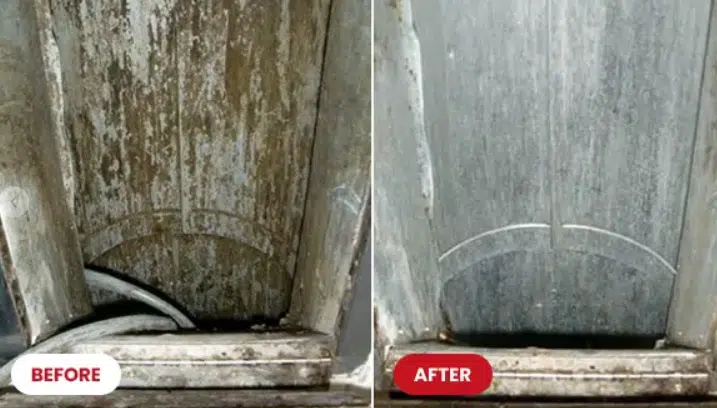
Cost avoidance is the most immediate benefit. Regular cleaning prevents the kind of organic buildup that requires emergency or remediation-level service. A chute that’s cleaned on a quarterly or semi-annual schedule with interim deodorization treatments requires far less intensive intervention at each service visit than one that has gone years without professional attention.
The per-visit cost of a maintenance program is a fraction of the cost of a remediation service, and remediation services don’t undo the reputational or retention damage that accumulated in the interim.
Revenue protection is the longer-term value driver. Every lease renewal that a well-maintained building secures over a neglected competitor represents direct revenue. Every negative review that a clean building avoids represents a prospective resident who converted to an applicant rather than moving on.
Every vacancy that fills faster because your building’s online rating is strong rather than damaged helps you avoid certain costs. These revenue impacts don’t appear on a maintenance budget line, but they are real and they compound over time.
The following are the core components of an effective scheduled trash chute maintenance program for Colorado multi-family properties:
- Professional steam or pressure cleaning of the full chute shaft, including walls, intake doors, and the base collection area, on a structured frequency aligned to building usage and size
- Application of EPA-registered antimicrobial treatments to shaft surfaces following cleaning to inhibit biofilm regrowth and odor-producing bacterial activity
- Inspection and documentation of chute door hardware, self-closure mechanisms, and any visible structural concerns within the shaft
- Deodorization service at interim intervals between full cleaning visits to maintain air quality in trash rooms and adjacent common areas
- Written service reports provided to property management after each visit, supporting compliance documentation and maintenance record-keeping
Asset preservation rounds out the value case. Chute shaft surfaces, intake doors, and collection room infrastructure that are maintained in clean condition last longer and require less frequent capital replacement than those subjected to years of chemical and biological degradation from unmanaged waste buildup.
If you’re thinking about the long-term value of your Colorado asset, the maintenance program pays dividends that extend well beyond the service visit itself.
How Does Fikes Help Your Building Through Certified Trash Chute Cleaning?
Fikes brings the same commitment to certified, protocol-driven facility services that Colorado apartment maintenance teams need to keep multi-family properties clean, compliant, and competitive.
As a comprehensive facility services and product provider, we deliver trash chute cleaning programs that are built around the specific demands of multi-family residential buildings, not adapted from commercial or industrial service models.
Every Fikes trash chute cleaning program starts with a facility assessment that accounts for the building’s chute configuration, usage volume, current condition, and any existing odor or pest concerns.
From there, we develop a service schedule and protocol that’s calibrated to the actual risk profile of your property, not a generic one-size-fits-all template. This matters because a 40-unit walk-up and a 300-unit high-rise have fundamentally different maintenance demands, and a program that works for one may be insufficient for the other.
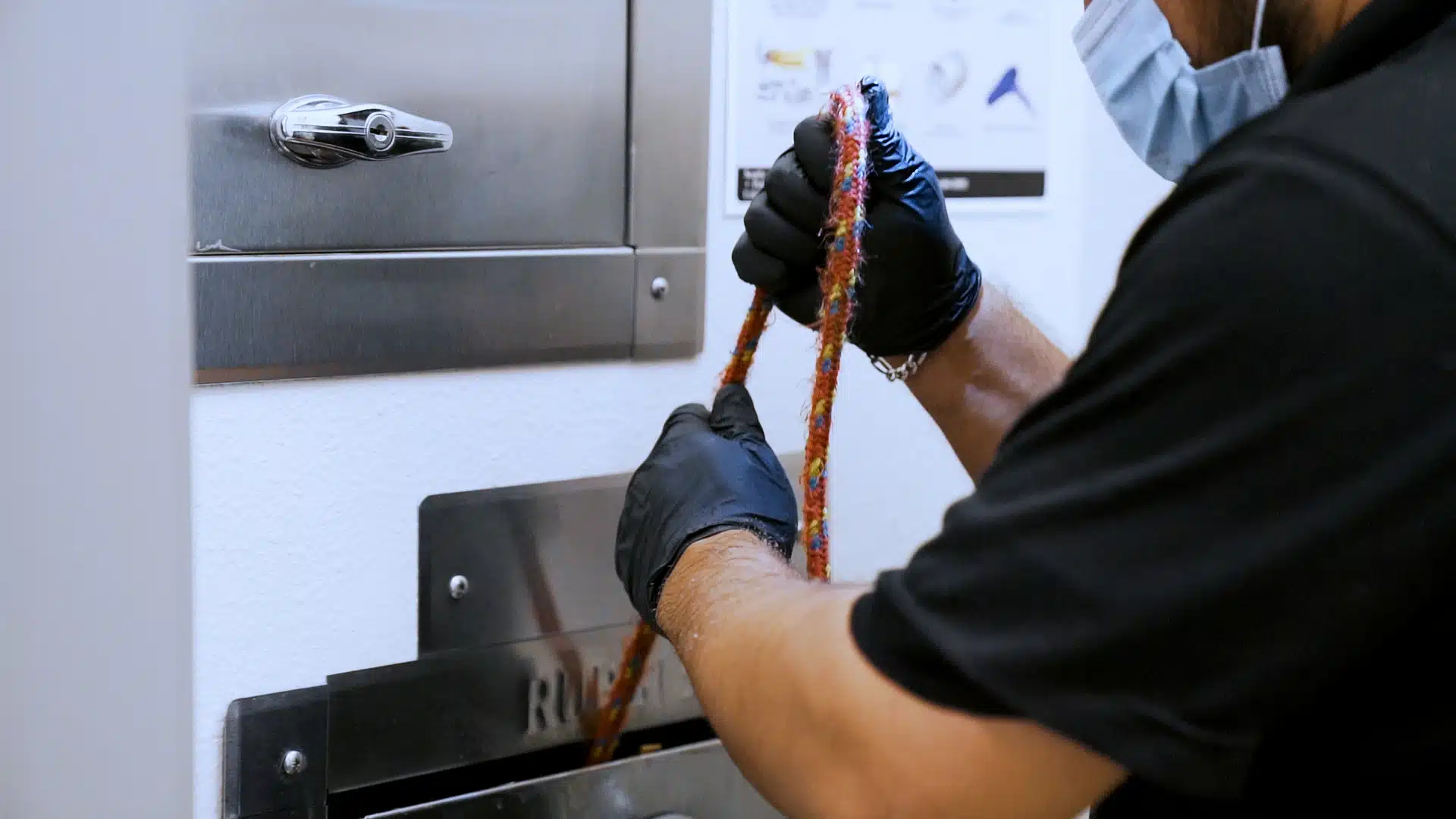
Our technicians are trained in the full scope of chute cleaning methodology: steam cleaning, pressure washing, antimicrobial treatment application, deodorization, and hardware inspection.
Every service visit is documented, and you receive written reports you can use for maintenance records, insurance documentation, and compliance purposes. If you’re navigating fire code compliance or health code requirements related to waste management infrastructure, this documentation trail is a meaningful operational asset.
Real-World Example
A luxury mid-rise property management team in Colorado Springs reached out to us after a pest management vendor flagged the trash chute system as the likely entry point for a recurring cockroach issue in the building’s lower floors.
We performed a comprehensive deep-clean service on the full chute shaft and collection room, removing the organic buildup that had been sustaining the pest population. We then established a bi-monthly maintenance program with antimicrobial treatments at each visit.
At the six-month mark, the pest management vendor confirmed that cockroach activity had been eliminated from the previously affected units, and the property’s maintenance team credited our chute program as the foundational fix that made the pest treatment effective.
The property’s next lease renewal cycle saw a 12% improvement in on-time renewals compared to the prior year.
For property managers who are evaluating the cost of dirty trash chutes against the investment of a professional maintenance program, we offer a straightforward assessment process that benchmarks current chute conditions and provides a clear, transparent service proposal.
The goal is not to sell a service but to help you understand exactly what your chute systems need and what the return on that investment looks like in terms you can take to an ownership group or asset management team.
Why Is Now the Right Time to Reassess Your Property’s Trash Chute Maintenance Program?
The Colorado multi-family market rewards properties that deliver a consistently high-quality resident experience.
In a market where prospective residents have more information and more choices than ever before, the condition of a building’s shared infrastructure, including its trash chutes, is a competitive variable that property managers can control.
The cost of dirty trash chutes isn’t hypothetical. Instead, it shows up in lease non-renewals, in one-star reviews, in pest remediation invoices, in fire code citations, and in the slow erosion of a property’s market reputation.
Fortunately, these costs are preventable. A structured, professionally managed multi-family trash chute cleaning program addresses the root causes of all of them before they become line items on a budget variance report.
Property hygiene in CO is a front-line competitive advantage. The buildings that win resident loyalty, command stronger rents, and hold their value over time are the ones where management teams treat maintenance not as a cost to minimize but as an investment to optimize.
Reach out to us today to get your trash chute maintenance program evaluated and learn how our certified cleaning programs protect Colorado multi-family properties and the residents who call them home.