

For owners and operators of event venues, stadiums, casinos, gas stations, restaurants, bars, entertainment centers, and other businesses with high restroom use, specialized restroom sanitation is non-negotiable because standard cleaning programs are built for average occupancy, not peak-load traffic. Without protocols scaled to high-volume use, restrooms become odor sources, health code liabilities, and the most visible symbol of how well a venue is managed. A single bad restroom experience shapes the guest’s entire impression of your facility.
When was the last time a guest raved about your restrooms? Probably never. But how many guests have walked out, or left a one-star review, because of them?
For operators of high-volume businesses, restrooms are one of the most operationally demanding spaces in the facility, and one of the most consequential. They absorb thousands of uses per day during peak periods, they’re the first thing a guest notices when something is wrong, and they’re consistently cited among the top reasons guests choose not to return.
Standard commercial cleaning programs were designed for predictable, moderate-use environments. They operate on fixed schedules, apply general-purpose products, and assume a level of traffic that high-volume venues blow past within the first hour of an event.
The result is a structural mismatch: a cleaning program calibrated for an office building trying to keep pace with a sold-out arena.
Specialized restroom sanitation exists to close that gap. And for high-volume venues, the gap isn’t a minor operational inconvenience. It’s a direct driver of guest satisfaction, health code compliance, and the long-term reputation of the facility.
Table of Contents
Why Are Restroom Demands at High-Volume Venues Fundamentally Different from Standard Commercial Properties?
The restroom at a regional event center during a sold-out concert and the restroom at a suburban office park on a Tuesday morning aren’t the same problem. They share a physical form, like stalls, sinks, drains, and dispensers, but the operational demands are separated by an order of magnitude.
Understanding why requires thinking about what actually happens to a restroom under sustained high-volume pressure.
Traffic concentration is the defining variable. A stadium restroom may process hundreds of guests in a single intermission window. A casino restroom operates around the clock with no true off-peak period. A busy nightclub or bar serves its heaviest traffic in the hours when standard cleaning staff have long since gone home. A gas station on a highway interchange turns over continuously through the night.
In each of these environments, the interval between cleaning cycles isn’t measured in hours; it’s measured in the number of uses that accumulate between service visits. And that number can reach levels that standard cleaning schedules were never designed to manage.
The physical consequences of this traffic load are predictable: floors become wet and soiled, toilets and urinals require attention between full cleans, dispensers empty faster than scheduled restocking accounts for, odor-producing compounds accumulate in drains and grout, and the overall condition of the restroom degrades visibly and rapidly.
For guests, this degradation is immediate and personal. It triggers a visceral response that’s extremely difficult to reverse once it has occurred during their visit.
A specialized restroom sanitation program accounts for all of this by building the service model around actual usage patterns rather than a generic schedule, and for high-volume venues, that difference defines whether the program can keep pace with the facility’s operational reality.
What Does Specialized Restroom Sanitation Actually Require in a High-Volume Venue Setting?
Specialized restroom sanitation for high-volume venues isn’t simply a more frequent version of standard cleaning. It requires a fundamentally different service architecture: different products, different staffing models, different protocols, and a different philosophy about what the program is trying to achieve during peak operating periods.
During events or peak hours, the primary objective of a specialized restroom sanitation program shifts from deep cleaning to active maintenance. keeping restrooms functional, stocked, and presentable in real time rather than restoring them to a baseline condition after the fact.
This requires dedicated on-site service personnel during peak periods, rapid-response restocking of paper products and soap dispensers, active attention to toilet and urinal condition between full service cycles, and continuous monitoring of odor conditions with chemistry designed to address the source rather than mask the symptom.
The following are the core components of a specialized restroom sanitation program designed for high-volume venue operations:
- Event-load service scheduling with staffing and service intervals scaled to anticipated attendance, with escalation protocols for sold-out or above-capacity events
- Commercial-grade disinfectant programs matched to the soiling and pathogen profile of high-traffic public restrooms, including drain maintenance chemistry to address odor at the source
- Consumption-based supply management that replaces fixed-schedule restocking with replenishment triggered by actual usage, eliminating the empty-dispenser problem that generates guest complaints
- Touchpoint prioritization protocols that ensure the highest-contact surfaces—door handles, flush actuators, faucet controls, and stall hardware—receive documented attention at defined intervals during peak periods
- Post-event deep cleaning protocols that restore restrooms to full-service condition between events, addressing the accumulated soiling that active maintenance manages but doesn’t fully remediate
Venues that invest in this level of service architecture see a measurable difference in guest experience outcomes, health code compliance standing, and the frequency and severity of restroom-related complaints, all of which affect the operational and reputational performance of the facility.
How Do Restroom Conditions Drive Guest Satisfaction Scores and Online Reputation?
The connection between restroom condition and guest satisfaction is well documented and consistently underestimated by venue operators who treat restroom maintenance as a background function.
Consumer research across the hospitality and entertainment industries places restroom cleanliness among the top three factors guests cite when rating their overall venue experience, ranking alongside food and beverage quality and staff service in terms of influence on satisfaction scores and return visit intent.
The asymmetry of this relationship is what makes it operationally significant. Guests who experience clean, well-maintained restrooms rarely mention them in reviews. It’s an expectation met, not a surprise delivered.
But guests who encounter dirty, odorous, or poorly stocked restrooms mention them specifically, repeatedly, and in terms that are visible to every prospective visitor who reads that review before deciding whether to attend an event, book a reservation, or choose a venue for a private function.
For example, for a casino, a recurring theme of restroom complaints in online reviews suppresses table games and slot revenue by influencing the decision calculus of guests who have options. For an event venue competing for corporate buyouts and private events, a low sanitation rating on a venue discovery platform is a direct impediment to booking conversion.
And for a high-volume restaurant or nightclub, restroom reviews on Yelp and Google aren’t peripheral commentary; they’re ranking signals and trust indicators that prospective guests weigh heavily.
Real-World Example
A mid-sized event center in the Pacific Northwest with a capacity of approximately 3,500 guests reached out to Fikes after its venue management team identified a pattern of restroom-related complaints in post-event surveys and online reviews.
The facility had been operating under a standard janitorial contract that provided pre-event setup and post-event cleanup but no active restroom monitoring or maintenance during events.
Fikes designed an event-load service program that placed dedicated restroom attendants on-site during all ticketed events, established a 30-minute active service cycle for all restroom zones during peak periods, and implemented a consumption-based paper and soap supply program to eliminate mid-event stockouts.
Within two event seasons, restroom satisfaction scores in the venue’s post-event surveys improved by over 30%, and the frequency of restroom-related complaints in online reviews dropped to near zero.
The investment in specialized restroom sanitation is a reputation management strategy with a measurable return that flows directly through to booking volume and guest retention.
How Does Standard Commercial Cleaning Compare to Specialized Restroom Sanitation?
The operational differences between a standard commercial cleaning program and a specialized high-volume restroom sanitation program are significant across every dimension that matters to a venue operator. The table below illustrates the key contrasts:
| Factor | Standard Commercial Cleaning | Specialized High-Volume Sanitation |
| Cleaning Frequency | Fixed schedule regardless of traffic volume | Adaptive; frequency scales with event attendance and peak periods |
| Product Grade | General-purpose EPA-registered cleaners | Commercial-grade disinfectants matched to pathogen and soiling risk |
| Odor Control | Surface deodorizer applied during routine clean | Drain treatment, dispenser systems, and odor-neutralizing chemistry between visits |
| Supply Management | Restocked on scheduled visits; mid-event stockouts common | Consumption-based replenishment; supplies managed to event load |
| Staff Training | General cleaning procedures; no venue-specific protocols | Trained in high-traffic sequencing, touchpoint prioritization, and rapid-response restocking |
| Guest Experience Impact | Inconsistent; restrooms degrade between fixed service intervals | Consistently maintained; restroom condition supports positive venue impression |
| Health Code Risk | Elevated during peak occupancy if cleaning intervals are not adjusted | Managed through documented protocols and verified sanitation outcomes |
For venue operators evaluating whether their current cleaning program is adequate, this table is a useful diagnostic. And for most high-volume facilities running on standard commercial contracts, the gaps it reveals aren’t minor.
What Are the Health Code and Compliance Implications of Inadequate Restroom Sanitation at High-Traffic Venues?
Beyond guest experience, restroom sanitation at high-volume venues carries a compliance dimension that you can’t treat as secondary.
Health departments in most jurisdictions conduct routine and complaint-triggered inspections of public-facing facilities, and restroom condition is a primary inspection category for restaurants, bars, casinos, and entertainment venues that hold food service or public assembly permits.
The specific compliance risks vary by venue type. For example, a restaurant or bar with persistently poor restroom sanitation faces the possibility of point deductions on health inspections that are now publicly posted in most states, creating a direct link between restroom compliance failures and the public perception of the establishment’s overall food safety standards.
A stadium or arena that fails to maintain adequate restroom facilities during peak occupancy may face findings related to public health ordinances governing sanitation standards for assembly occupancies. And a casino operating under a gaming license faces regulatory scrutiny across its entire operation, and documented sanitation deficiencies create audit risk that extends beyond the restroom itself.
The documentation dimension of compliance is also frequently overlooked. Health code compliance is increasingly about the documentation of a systematic sanitation program: written protocols, service logs, product records, and evidence of trained staff executing a defined program.
A venue that relies on undocumented, informal cleaning practices, regardless of how conscientious the staff may be, is operationally vulnerable in a way that a venue with a documented specialized sanitation program is not.
Real-World Example
A casino property engaged Fikes following a health inspection that cited inadequate restroom sanitation documentation as a deficiency during a routine review.
The property’s existing cleaning program had no written service protocols, no service logs, and no product records that could be presented to inspectors as evidence of a systematic sanitation approach.
We implemented a comprehensive restroom sanitation program that included written protocols for each restroom zone on the property, a digital service log maintained by Fikes technicians at every visit, a documented product inventory with current Safety Data Sheets, and a quarterly review meeting between the Fikes account manager and the property’s facilities director.
At the next inspection cycle, the previously cited deficiency was cleared with no additional findings. The property’s director of facilities noted that the documentation infrastructure Fikes provided was as valuable as the cleaning itself because it made the program auditable in a way the prior approach never was.
For any venue holding a public-facing permit or license, the documentation of a professional, structured, specialized restroom sanitation program is a compliance asset that pays dividends every time an inspector, an auditor, or a prospective partner asks to see how the facility manages its sanitation obligations.
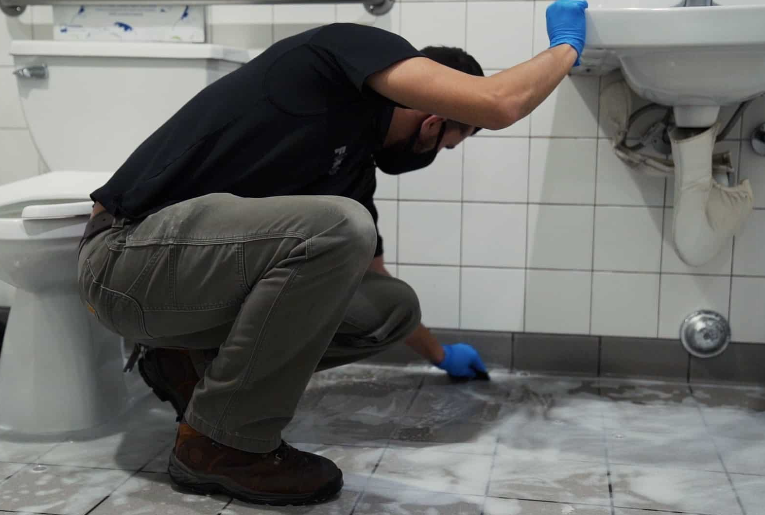
How Does Fikes Deliver Specialized Restroom Sanitation for High-Volume Venues and Entertainment Facilities?
Fikes approaches restroom sanitation for high-volume venues as a distinct service category. One that requires a different operational model than standard commercial janitorial work.
As a comprehensive facility services and product provider, we develop specialized restroom sanitation programs for the full range of high-volume public environments: event centers and arenas, casinos and gaming facilities, high-traffic food and beverage operations, entertainment complexes, and the gas station and convenience retail sector where around-the-clock restroom maintenance is a competitive differentiator.
Every Fikes program for a high-volume venue begins with an operational assessment that maps restroom zones against actual traffic load, identifies the highest-risk periods and highest-use fixtures, and establishes a service architecture calibrated to the specific demands of that facility.
For a venue with seasonal event programming, that means a program that scales up for peak periods and maintains baseline standards during off-peak windows. For a 24-hour casino or highway gas station, it means a program designed around continuous use with no true downtime, a fundamentally different operational challenge than a standard commercial property.
We don’t just supply the service labor but also the complete product infrastructure: commercial-grade dispensing systems for soap, paper, and sanitizer; drain maintenance chemistry; odor-control systems; and the consumable supply chain that keeps dispensers stocked and functioning across peak periods.
This integrated supply-and-service model eliminates the coordination gaps that arise when venues source cleaning services and facility products from separate vendors.
For venue operators who are evaluating whether their current restroom sanitation program is genuinely meeting the standard their guests and regulators expect, we offer a straightforward facility assessment that benchmarks current conditions and protocols against the demands of the venue’s actual operating profile.
The goal is an honest picture of where the program stands and a practical path to where it needs to be.
Why Is Specialized Restroom Sanitation the Standard That High-Volume Venues Can No Longer Afford to Skip?
The restroom isn’t a back-of-house problem. For every guest who walks through the door of an event venue, a stadium, a casino, a restaurant, or a gas station, the restroom is a front-line experience. And it’s one that shapes their overall impression of the facility as clearly as the quality of the food, the comfort of the seating, or the friendliness of the staff.
Standard cleaning programs were never designed to keep pace with the operational demands of high-volume public environments. They fall behind under peak load, generate complaints during the moments that matter most, and leave venue operators exposed to compliance risk that a properly documented specialized restroom sanitation program would prevent.
The cost of that gap is measured in guest satisfaction scores, online review ratings, health inspection findings, and ultimately in the booking volume and revenue that a venue’s reputation either supports or suppresses.
Specialized restroom sanitation is the appropriate standard for any facility where restrooms serve hundreds or thousands of guests per day under conditions that standard cleaning was never built to handle.
For high-volume venue operators, the question isn’t whether specialized restroom sanitation is worth the investment—it’s whether the current program is actually delivering it.
The guests who walk past a clean restroom without noticing it are the guests who come back. Make sure yours never have a reason to notice.
Ready to bring your venue’s restroom sanitation program to the standard your guests expect? Get in touch with us to schedule a facility assessment and learn how our specialized restroom sanitation programs are built for the real demands of high-volume venues.