

Poor sanitation removes the barriers between pests and everything they need to survive. In Washington, dirty commercial spaces create direct access to food, water, and shelter, the three conditions that trigger and sustain pest infestations. For businesses, this means regulatory risk, reputational damage, and costly extermination cycles that could have been prevented at the cleaning stage.
What if your facility’s pest problem has less to do with your pest control provider and more to do with what happens between their visits?
This question may be uncomfortable for Washington facility managers and restaurant owners. The answer often points to the cleaning program, not the pest control schedule.
Business pest control services are an important part of facility maintenance, but they cannot remove every condition that attracts pests. Their job is to control pests that have already found a way inside or near your building. Cleaning and sanitation help prevent those pests from showing up in the first place.
When a business relies on pest control as its main defense, it treats the problem without fixing the cause. Food scraps, standing water, and dirty surfaces can continue to attract pests between service visits. These conditions can build up faster than a monthly pest control visit can address them.
Washington’s climate also creates challenges for commercial facilities. The Pacific Northwest has plenty of rain, mild winters, and long wet seasons. These conditions give rodents and insects more chances to find food, water, and shelter throughout the year.
For restaurants and other food service businesses, pest problems can also affect public health inspection results. In Washington, inspection reports may become available to the public, allowing potential customers to see reported problems.
The real cost of poor sanitation goes beyond the money needed to deal with an infestation. It can also mean lost customers, damage to your reputation, and problems that grow unnoticed until they become much harder to fix.
Let’s talk more about the hidden cost of poor sanitation and how dirty spaces fuel pest infestations.
Table of Contents
What Is the Pest Triangle, and Why Does Sanitation Break It?
Every pest infestation starts with the same three things: food, water, and shelter. Pest control experts often call this the “pest triangle.” It explains what pests need to survive and settle into a building.
Remove any one of these three things, and pests are much less likely to take hold. When all three are available, even a well-built and well-maintained building can develop a pest problem.
Food scraps on floors and in drains give pests a food source. Water from leaking pipes, condensation around heating and cooling systems, and puddles in mop closets provide moisture. Cluttered storage rooms, cardboard boxes against walls, and dark utility areas give pests places to hide. Each of these is a cleaning or maintenance issue before it becomes a pest problem. This is an important difference when planning how to prevent infestations.
Cleaning and pest control work best when they support each other. Facilities with good cleaning practices often need fewer chemical treatments, have fewer repeat pest problems, and can resolve infestations more quickly when they occur.
Commercial sanitation in Washington is about more than keeping a building looking clean. It is a key part of preventing pests and should be a regular priority for every facility manager.
Where Are the Most Common Sanitation Gaps in Commercial Facilities?
Sanitation failures tend to cluster in the same locations across industries, and understanding where they occur is the first step toward closing them. Three commercial environments, offices, healthcare facilities, and manufacturing plants, each carry their own distinct vulnerabilities.
In offices, pest prevention through cleaning is often overlooked because these spaces seem low-risk. Shared kitchens are a common source of problems. Crumbs under refrigerators, food residue in microwaves, and trash bins left full overnight can attract rodents and cockroaches.
Healthcare facilities face a greater challenge. Good cleaning practices help protect patients from infections and keep pests away. However, busy hallways, food service areas, and frequent deliveries can give pests more chances to enter the building.
Manufacturing plants and food processing facilities face some of the biggest risks. Food residue on production lines, standing water near washing stations, pallets stored directly on floors, and gaps around floor drains can attract rodents and insects that feed on stored products.
All three types of facilities share one important lesson: consistent cleaning matters. Even small cleaning problems can attract pests if they are allowed to continue. Over time, these gaps can give pests the food, water, and shelter they need to settle in.
The following are the most frequently cited sanitation failures that precede pest infestations in commercial facilities:
- Food and organic debris accumulation in hard-to-reach areas, including floor drains, equipment bases, wall voids near kitchen equipment, dumpster pads, and loading dock seams
- Moisture and water management failures, including slow-draining sinks, condensation pooling beneath refrigeration units, leaking pipe joints inside wall cavities, and inadequate ventilation in janitorial closets
Both categories are entirely preventable with a disciplined, scheduled cleaning program. Still, both remain among the most common findings during pest inspections across Washington commercial facilities.
Real-World Example
A multi-tenant office complex in Tacoma, managing roughly 80,000 square feet across four buildings, had been logging rodent sightings in shared break room areas for the better part of a year.
The property management team had engaged a business pest control vendor on a bi-monthly service schedule, and each visit cleared active signs of entry and activity. But within four to six weeks, new sightings were reported, almost always in the same locations, on the same floors, near the same kitchenette areas.
A combined inspection and a sanitation assessment from us found that the break rooms were being wiped down nightly but never deep-cleaned beneath or behind appliances.
As a result, a thin but continuous layer of food residue had accumulated under three under-counter refrigerators and behind two microwaves mounted at counter level, not visible during routine cleaning, but substantial enough to serve as a reliable food source for rodents entering through a utility corridor on the building’s north side.
We added pest prevention through cleaning protocols to the nightly janitorial scope: monthly appliance pull-and-clean for all break room equipment, bi-weekly bin sanitization, and a drain flush for kitchenette sinks.
Rodent sightings dropped to zero within six weeks of the first deep-clean cycle and did not recur over the following eight months of documented service records.
The pest control program was performing exactly as designed, but without the sanitation foundation to support it, it was managing symptoms rather than resolving the condition driving them.
How Do Pest Infestations Affect Washington Businesses?
The financial and reputational consequences of pest infestations in Washington businesses extend well beyond the immediate cost of extermination.
Regulatory agencies, including the Washington State Department of Agriculture, the Washington State Department of Health, and local county health authorities, all have enforcement authority over facilities where pest activity is detected.
Violations can result in fines, mandatory closures, and, in the case of food service operations, public posting of inspection failures.
Damage to your reputation can be harder to measure, but it can be just as serious. A single negative review about a pest sighting can turn away potential customers for months. Many people rely on online reviews when choosing a business. A photo of a cockroach in a restaurant or a report of a rodent in a hotel hallway can spread quickly online, making it difficult for marketing efforts to repair the damage.
Pest problems can also affect employees. When pests appear in the workplace, staff may feel stressed or lose confidence in how the building is managed. These concerns can affect morale and make it harder for employees to focus on their work.
Preventing an infestation usually costs less than dealing with one after it starts. For Washington businesses, commercial sanitation in WA is a practical way to reduce pest risks, protect your reputation, and keep your facility cleaner and safer.
Why Are Washington Restaurants and Food Service Establishments at Higher Pest Risk Than Other Commercial Properties?
Restaurants face many of the conditions that attract pests. While an office may produce food waste in a break room for a few hours a day, a busy restaurant creates grease, food scraps, moisture, and warmth for 12 to 16 hours a day.
Washington’s food service industry also faces strict health and safety rules. The Washington State Department of Health and local county health departments conduct inspections, sometimes without notice. Inspection results are often available to the public through county health databases.
For Washington restaurant owners, a pest finding during an inspection can lead to problems that go beyond the inspection report. It can affect customer trust, online reviews, and the restaurant’s reputation.
The layout of a commercial kitchen can make pest prevention harder. Floor drains under prep tables and cooking equipment can collect food scraps and grease. Regular nightly cleaning may not fully remove this buildup.
Other problem areas include grease traps, floor joints near cooking equipment, the inside surfaces of exhaust hoods, and the spaces behind refrigerators. Food can collect in these areas, while moisture creates conditions that allow pests to hide and multiply.
Deliveries and receiving areas create another risk that restaurant owners may overlook. Cardboard boxes from food suppliers can carry cockroach egg cases into a kitchen. If boxes and packaging waste pile up near loading docks, they can give pests places to hide and find food between cleaning sessions.
For restaurant owners managing one location or several, it is important to remember that pests can enter and settle in many parts of a building. A strong commercial sanitation in WA strategy should cover the entire facility, from the kitchen and storage rooms to loading docks and receiving areas. Consistent cleaning helps reduce pest risks, protect inspection results, and maintain customer confidence.
What Does the Data Say About Sanitation and Pest Infestations?
The relationship between sanitation quality and how often pest infestations happen is well-documented across industry studies and pest management research. The following comparison illustrates how sanitation investment translates into measurable pest risk outcomes:
| Factor | Facilities With Strong Sanitation Programs | Facilities With Reactive Sanitation Practices |
| Average pest inspection findings per year | 1–2 minor findings | 5–8 findings, including critical violations |
| Likelihood of requiring emergency pest treatment | Low (est. 12–18%) | High (est. 55–70%) |
| Repeat infestation rate within 12 months | ~15% | ~60% |
| Regulatory citation risk | Substantially reduced | Elevated, especially in food and healthcare |
| Annual pest control spend | Lower and predictable | Higher and unpredictable |
| Time to infestation resolution | Faster (clean environment supports treatment) | Slower (pest harborage persists post-treatment) |
The pattern is consistent: facilities that treat sanitation as a routine operational priority experience fewer pest infestations, spend less on remediation, and recover faster when problems do arise.
How Does an Integrated Cleaning and Pest Control Approach Outperform Separate Vendors?
The traditional model of facility maintenance treats cleaning and pest control as independent functions managed by separate vendors, operating on separate schedules, with no formal communication between them.
This structure has a fundamental flaw: the conditions that pest control professionals identify during inspections are, in many cases, cleaning conditions. Without a mechanism for the pest team’s findings to inform the cleaning team’s protocols, those conditions persist.
An integrated approach eliminates this gap. When the same provider manages both commercial sanitation in WA and pest prevention through cleaning, inspection findings translate directly into updated cleaning procedures.
When a pest technician finds grease buildup behind a fryer during a routine visit, an integrated service team can arrange a deep cleaning right away. This is often faster than sending a report to a separate company and waiting for the cleaning crew to receive and act on the recommendation.
Combining these services also makes recordkeeping easier. Facilities that must meet health and safety rules can keep one set of service records showing how cleaning and pest control work together over time.
Bundling cleaning and pest control services can also lower overall maintenance costs compared with hiring and managing two separate vendors.
If you’ve experienced recurring pest infestations despite regular extermination services, the answer is rarely a different pest control vendor. The answer is almost always a more disciplined sanitation program combined with business pest control.
How Does Fikes Solve the Sanitation-Pest Connection for Washington Businesses?
Fikes is one of the few comprehensive facility services providers in the Pacific Northwest that brings together commercial cleaning and pest control under a single, coordinated service model.
For businesses across Washington dealing with recurring pest infestations or those seeking to prevent them before they begin, this integration is the defining advantage of working with us.
Our pest control team and cleaning crews operate with shared information. When pest technicians identify sanitation conditions during inspections, those findings are communicated directly to the cleaning team, and service protocols are adjusted accordingly. This closed-loop model means that the conditions driving pest infestations are addressed at their source, not just treated at the surface.
Real-World Example
A mid-size restaurant in the Seattle metro area was preparing for an upcoming health inspection and identified pest control documentation as a gap in its compliance record.
The facility had an active pest control contract, but inspections over the prior 18 months had produced three findings related to cockroach activity in the kitchen—each treated, each returning within six to eight weeks.
With the health inspection approaching, facility leadership needed a solution that would hold, not simply a treatment that would clear the finding temporarily.
We did an integrated facility services assessment and identified the root cause within the kitchen’s sanitation program. Grease had accumulated beneath two pieces of cooking equipment that were moved only during quarterly deep-cleans. And a floor drain in the prep area showed active biofilm and moisture accumulation.
We decided on a coordinated response: monthly deep-cleaning beneath and behind all cooking equipment, enzyme treatment of prep area drains on a bi-weekly schedule, and documentation of both activities integrated into the restaurant’s pest control service record.
The result was a clean inspection finding at the next pest control visit and through the health inspection.
Ultimately, when cleaning and pest control operate as a unified program with shared documentation, both the compliance record and the physical outcomes improve in ways that neither service achieves independently.
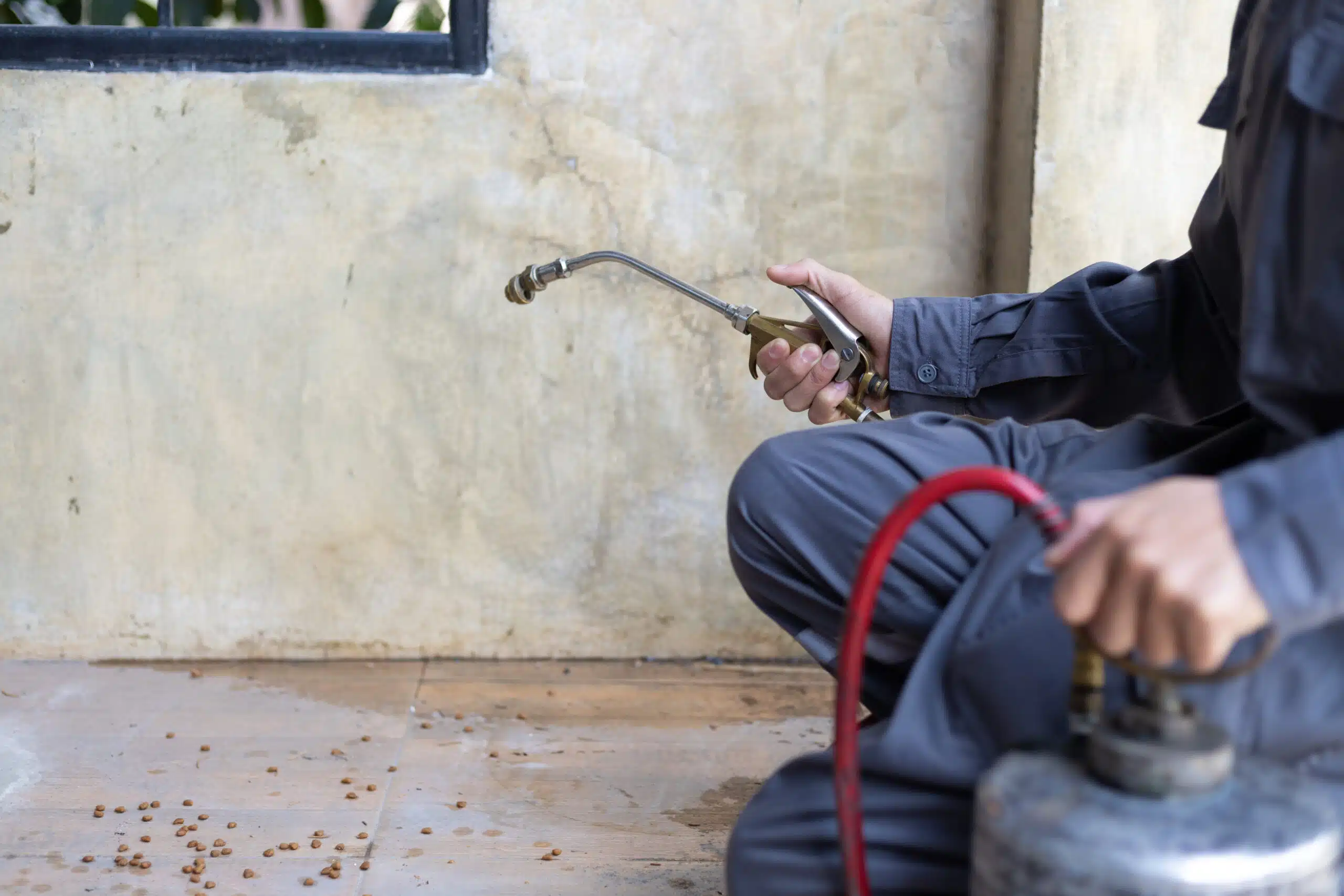
What Does an Effective Sanitation-First Pest Prevention Program Look Like for Washington Restaurants Specifically?
A pest prevention program designed for a Washington restaurant should be different from a standard commercial pest control plan. The best results come from combining pest control with a thorough, consistent cleaning program.
Pest control treatments for common restaurant pests are well established. What often separates restaurants with clean inspection records from those with repeat problems is how well they clean, maintain, and document their facilities.
An effective restaurant program starts with a detailed cleaning review of each area. This helps identify where pests are most likely to find food, water, and shelter. Cooking areas need deep-cleaning steps that go beyond what a nightly cleaning service may cover.
Floor drains also need special attention. Flushing a drain during nightly cleaning may not remove all the buildup inside it. Without regular enzyme treatments or pressure cleaning, a layer of organic material called biofilm can build up. This layer holds moisture and food particles that can attract pests, even when pest control visits happen on schedule.
Outdoor areas matter just as much. A restaurant may keep its kitchen spotless but still attract pests if its dumpster area goes uncleaned for weeks. Food waste and spills near the building can give pests a reason to gather close to the back door.
For Washington restaurants, keeping good records is also important because health inspection results may be made public. A combined cleaning and pest control program creates a clear record of the work being done to prevent problems. This helps show inspectors that the restaurant takes prevention seriously rather than waiting for an infestation to occur.
A strong restaurant sanitation program should include:
- Cooking areas: Deep-clean fryers, equipment, floors, and hard-to-reach spaces where grease and food scraps collect.
- Floor drains: Remove buildup and use appropriate cleaning methods to control biofilm and organic waste.
- Storage areas: Keep food sealed, limit clutter, and store supplies off the floor.
- Delivery areas: Remove cardboard and packaging waste promptly to reduce hiding places for pests.
- Outdoor spaces: Clean dumpster pads, remove food waste, and check for gaps that could allow pests inside.
- Service records: Track cleaning tasks, pest control visits, and any problems found so staff can follow up.
Consistent cleaning and clear records help restaurants prevent repeat pest problems and respond more quickly when issues arise. During inspections, these records can also help demonstrate that the business follows a planned approach to sanitation and pest prevention.
Why Is Now the Right Time to Evaluate Your Facility’s Sanitation and Pest Strategy?
Pest infestations rarely arrive announced. By the time a rodent is sighted in a restaurant or a cockroach is found in a healthcare supply closet, the infestation has typically been developing for weeks.
The most effective time to address the conditions that drive pest infestations is before they manifest.
Washington commercial facilities that haven’t recently conducted a formal sanitation and pest vulnerability assessment are operating with incomplete information about their risk exposure.
An integrated facility services provider like Fikes can provide that assessment, identifying the specific gaps in a facility’s current program and recommending the targeted interventions most likely to reduce pest infestations over the long term.
Business pest control needs in Seattle are distinct from those in Spokane, Yakima, or the agricultural processing facilities of the Columbia Basin, and a service program built on strong commercial sanitation in WA must account for those regional differences to be fully effective against the hidden costs of pest infestations.
We bring the expertise, the regional knowledge, and the integrated service model to make a good pest control approach a reality for Washington businesses.
Whether your facility is dealing with an active infestation, a history of recurring problems, or simply a recognition that your current program needs a more rigorous foundation, reach out to us today to request a facility assessment and learn how our combined cleaning and pest control services can protect your business, your team, and your customers from the hidden costs of poor sanitation.