
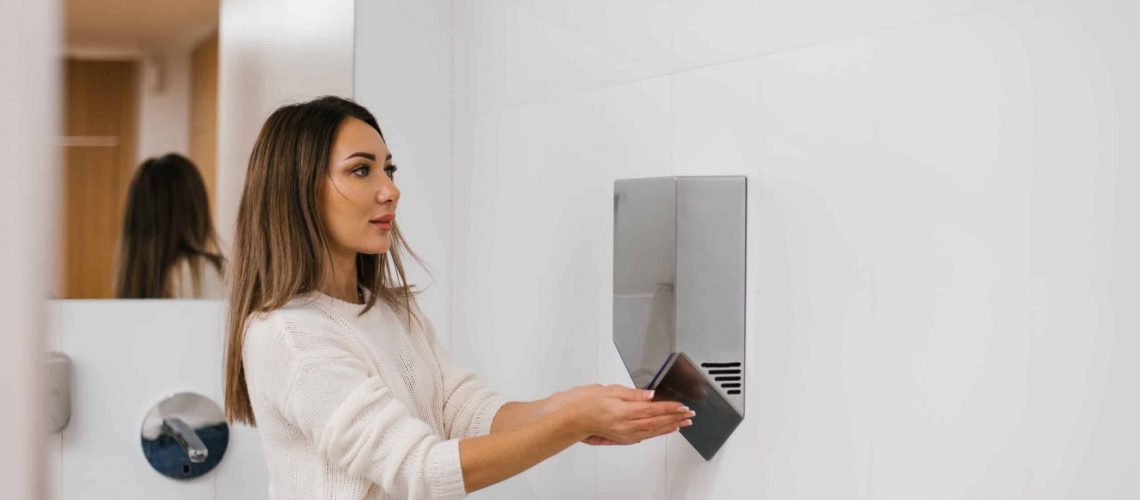
Touchless fixtures, including sensor-activated faucets, soap dispensers, paper towel dispensers, and flush valves, help Washington businesses dramatically reduce germ transmission by eliminating the shared contact surfaces where pathogens accumulate. Beyond the hygiene benefits, upgrading to touchless restroom solutions in WA supports ADA compliance, reduces consumable waste, and signals to customers that your brand prioritizes their safety, all at an investment level that scales to any facility budget.
Sixty percent of customers will go out of their way to stop at a business and spend more money there if they know the restrooms are clean. That single statistic should stop every facility director and property manager in Washington cold.
The restroom isn’t a back-of-house afterthought; it’s a first-impression touchpoint that customers evaluate with the same scrutiny they apply to a storefront, a menu, or a customer service interaction.
And in the current commercial landscape, where health consciousness has permanently shifted customer expectations, the standard has moved well beyond “clean enough.” Customers now expect hands-off.
The transition to touchless fixtures is one of the most visible, most meaningful, and most cost-effective commercial hygiene improvements a Washington business can make. The science behind why is straightforward. The execution, done right, is transformative.
Let’s explore how touchless fixtures impact health, hygiene, and customer perception.
How Dirty Are Manually Operated Restroom Fixtures?
Every time a person touches a manually operated faucet handle, a soap pump, or a paper towel dispenser lever, they are making contact with a surface that may have been touched by dozens or hundreds of people since its last cleaning.
Research from the American Society for Microbiology has found that a significant portion of people wash their hands incorrectly or incompletely, meaning that the very surfaces present at handwashing stations are among the most consistently contaminated in any commercial environment. The faucet handle touched by unwashed hands before washing defeats the purpose of the hygiene station it serves.
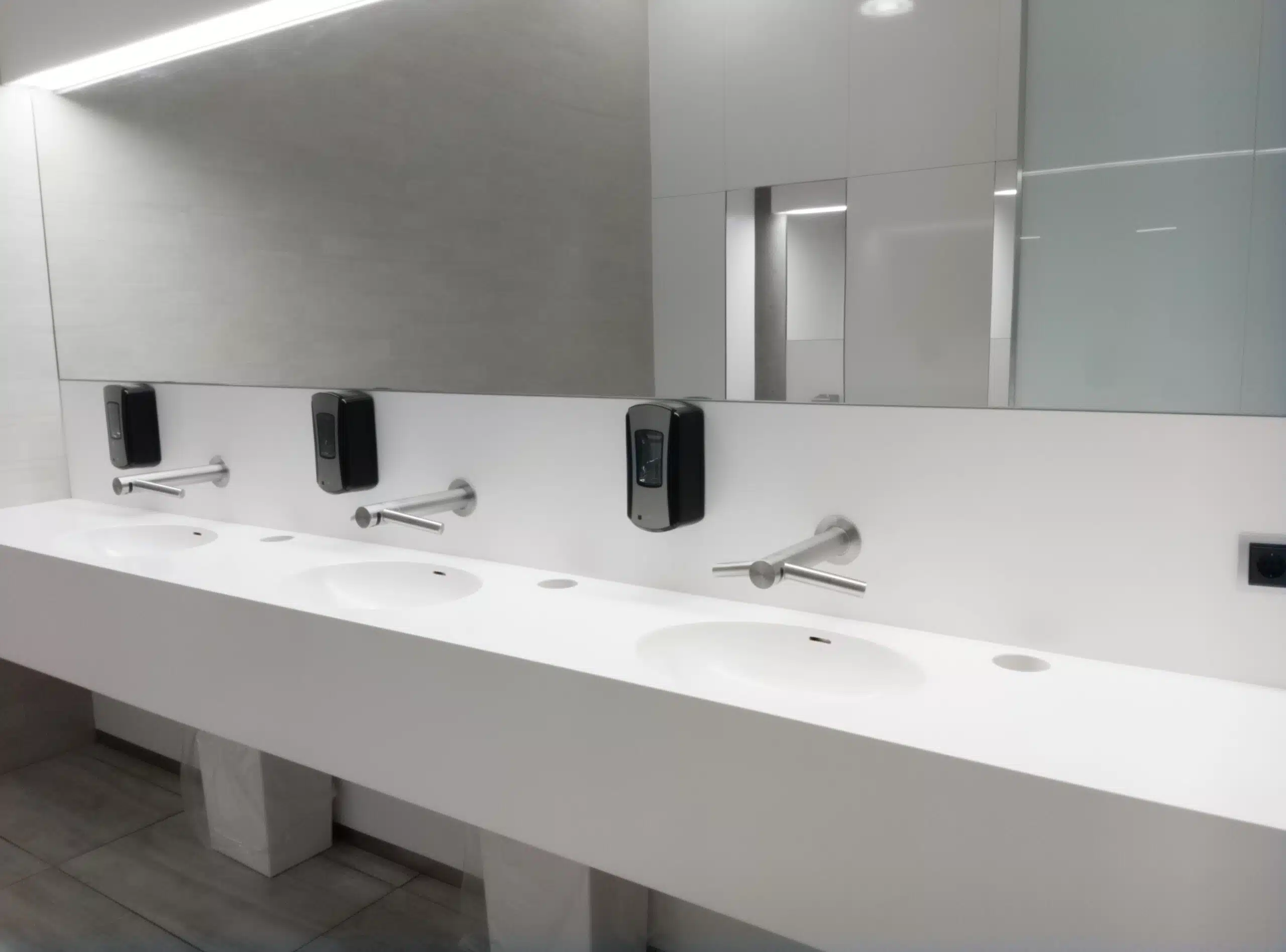
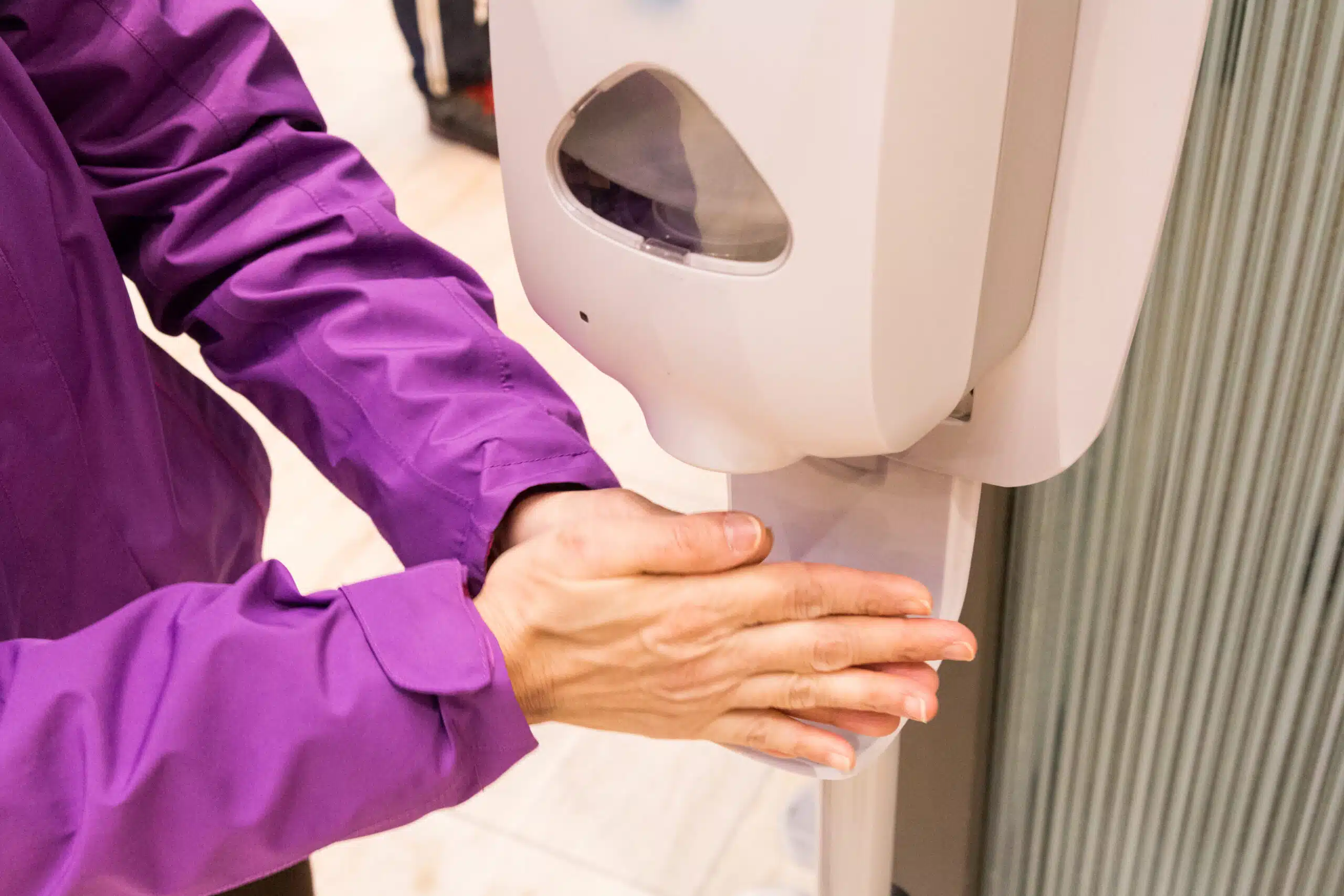
Touchless fixtures break this chain of transmission at its most critical link. A sensor-activated faucet eliminates the pre-wash handle touch entirely. An automatic soap dispenser removes the pump contact that transfers bacteria from hand to surface to the next user’s hand. A no-touch paper towel dispenser or air dryer means that the final step in the handwashing sequence doesn’t reintroduce contamination from a shared lever or crank. Each touchpoint removed is a vector closed.
The Centers for Disease Control and Prevention (CDC) has consistently identified handwashing as the single most effective individual action for preventing the spread of communicable illness, and commercial restroom design directly influences whether customers and employees complete that process effectively.
When the environment makes hygiene easier and safer, compliance rates rise, and the microbial load on shared surfaces falls accordingly.
The restroom’s microbial reality is invisible to the naked eye, but customers sense its consequences, and the shift to touchless fixtures makes that reality measurably safer.
Real-World Example
A multi-location restaurant group operating across the greater Seattle area reached out to us to upgrade restroom fixtures at four of their highest-traffic locations.
Prior to the upgrade, their restrooms used manual faucets, pump soap dispensers, and lever-operated paper towel dispensers. Customer feedback through post-visit surveys reflected recurring concerns about restroom cleanliness, even at locations where cleaning frequency was high.
After installing sensor-activated faucets, touchless soap dispensers, and automatic paper towel units, post-visit hygiene scores improved across all four locations within the first two service quarters. The group subsequently extended the touchless program to all remaining locations as part of a portfolio-wide commercial hygiene improvement initiative.
The physical environment had changed the customer’s perception of cleanliness as meaningfully as the cleaning program itself.
How Do Touchless Fixtures Support Compliance, Code, and ADA?
For Washington business owners, the case for touchless fixtures extends well beyond the germ transmission argument. There is a regulatory dimension to restroom design that every facility manager responsible for commercial hygiene improvements needs to understand, and touchless technology sits squarely in the center of it.
The Americans with Disabilities Act (ADA) requires that restroom fixtures in public accommodations be operable with one hand and not require tight grasping, pinching, or twisting of the wrist.
Sensor-activated faucets and automatic soap dispensers satisfy this requirement by eliminating the manual operation component entirely. They are, by design, the most ADA-compliant fixture option available. For Washington properties undergoing renovation or new construction, selecting touchless fixtures is the most straightforward path to meeting ADA fixture standards without additional hardware or adaptive devices.
Washington State also maintains its own building code requirements under the Washington State Building Code Council, which in many respects mirrors or exceeds federal ADA standards for commercial restroom design.
Facility directors managing nationwide restroom upgrades across multiple jurisdictions benefit from a touchless-first standard precisely because it tends to satisfy the most stringent requirements across state and local codes simultaneously, reducing the complexity of compliance management for multi-location portfolios.
Water conservation regulations present an additional compliance consideration. Sensor-activated faucets are engineered to deliver water only when hands are present, eliminating the waste associated with faucets left running by users who turn them on before lathering or forget to turn them off entirely.
For Washington properties subject to water efficiency standards, particularly in drought-designation years, touchless faucet technology provides a measurable, documentable reduction in water consumption that satisfies both environmental and operational goals.
Meeting compliance requirements and elevating the customer experience aren’t competing priorities when touchless fixtures are the chosen standard; they are the same decision.
Compare Restroom Fixture Types: What the Upgrade Actually Delivers
The following table illustrates the practical differences between conventional manual fixtures and touchless alternatives across the criteria that matter most to facility directors evaluating commercial hygiene improvements.
| Criterion | Manual Fixtures | Touchless Fixtures |
| Cross-contamination risk | High — shared contact surfaces at every touchpoint | Low — no shared contact surfaces in standard use |
| ADA compliance | Requires specific hardware; varies by fixture | Inherently compliant — no grasping or twisting required |
| Water consumption | User-controlled; higher waste risk | Sensor-controlled; measurably lower consumption |
| Consumable usage | Unregulated dispensing; higher waste | Metered dispensing; reduced soap and paper waste |
| Customer perception | Neutral to negative in hygiene-conscious contexts | Positive — signals investment in health and safety |
| Maintenance frequency | Higher — manual mechanisms wear faster | Lower — fewer moving parts; longer service intervals |
| Long-term cost profile | Lower upfront; higher operational cost | Higher upfront; lower ongoing waste and maintenance cost |
| Compliance alignment (WA) | Requires case-by-case evaluation | Typically satisfies ADA and state code simultaneously |
The comparison makes clear that the argument for touchless fixtures is not purely health-driven; it’s operational. Lower consumable waste, fewer maintenance calls, simplified compliance management, and improved customer perception together build a total-cost-of-ownership case that often surprises facility directors who frame the upgrade as a pure capital expenditure.
How Important is Consistency in Restroom Cleanliness for Multi-Location Operators?
For multi-location operators, whether managing a restaurant group, a retail chain, a hotel portfolio, or a network of commercial office properties, the highest-value restroom hygiene strategy is one that eliminates variability entirely.
A customer who visits two locations of the same brand and encounters dramatically different restroom experiences draws a conclusion about brand consistency that extends well beyond the restroom itself.
Touchless fixtures, standardized dispenser placement, and uniform product quality are the building blocks of a restroom experience that customers recognize as a brand standard rather than a location-by-location accident.
Nationwide restroom upgrades succeed when they are designed around a clear fixture specification, implemented by a service partner with the technical capacity to execute consistently across locations, and maintained through a service model that keeps every unit calibrated, stocked, and functional.
The failure mode for multi-location restroom programs is nearly always maintenance drift, where units run empty between service visits, sensors = fall out of calibration without correction, and dispenser placements vary from location to location because no standardized installation protocol was established.
The following principles guide a durable, portfolio-wide touchless fixtures standard:
- Specify a single fixture standard across all locations. A uniform specification eliminates the variance in customer experience that comes from location-by-location purchasing decisions and ensures that maintenance, refill, and replacement protocols are consistent and interchangeable across the portfolio.
- Partner with a service provider who manages maintenance, not just installation. The value of touchless fixtures is fully realized only when sensors are calibrated, reservoirs are kept filled, and mechanical failures are addressed quickly. An installation-only engagement delivers the hardware without the outcome.
The brands that treat their restroom program as a reflection of their broader brand standard rather than a facilities line item to be minimized are the ones whose customers notice, remember, and return.
Does Fikes Deliver Touchless Restroom Upgrades Across Washington?
For Washington facility directors looking to implement touchless restroom solutions at scale, Fikes brings more than two decades of commercial hygiene experience, a team of certified installation technicians, and a product catalog of over 3,000 high-quality supplies to every engagement.
Fikes is built for the kind of portfolio-wide standardization that multi-location operators require, not one-off installations, but systematic commercial hygiene improvements applied consistently across every property in the portfolio.
The Fikes touchless upgrade process begins with a walkthrough consultation. Fikes technicians assess each restroom’s fixture layout, traffic volume, water supply configuration, and existing dispenser infrastructure before recommending a touchless solution tailored to the space.
This removes the guesswork from product selection and ensures that sensor faucets are calibrated to the facility’s actual usage patterns, dispensers are positioned for maximum accessibility, and the installation complies with both ADA requirements and Washington State building codes.
Our restroom upgrade engagement includes:
- Expert installation of sensor-activated faucets, automatic soap dispensers, and touchless paper towel and sanitizer units
- No equipment purchase required—Fikes furnishes and maintains dispensers as part of the ongoing service agreement
- Scheduled refill service to ensure soap, sanitizer, and paper products are never depleted between visits
- Ongoing fixture maintenance and quick replacement in the event of sensor or mechanical failure
- Green-certified cleaning products used across all sanitation visits, supporting environmental compliance goals
- Coordination directly with facility management on scheduling to minimize disruption to building operations
Real-World Example
When a car lot built a new showroom and needed a complete restroom hygiene solution for both the customer-facing showroom floor and the service department, they turned to Fikes.
We installed dispensers throughout the facility, configured the supply program to cover both environments, each with distinct traffic volumes and hygiene demands, and established a delivery and maintenance schedule that kept every restroom continuously stocked and operational.
As a result, they raved about the installation being completed on time and how we subsequently managed both the showroom and service supply inventory with consistent efficiency. The standardized hygiene solution across both customer and employee spaces reflected the dealership’s brand standard in every area of the facility.
Fikes serves businesses of every size and industry across Seattle, Portland, and Denver, with an A+ BBB Rating and more than 3,500 active clients who have made Fikes their single-source partner for restroom hygiene, scenting, pest control, and facility services.
The Restroom Is the Brand Standard You’ve Overlooked
In Washington’s commercial landscape, where customer expectations for hygiene have shifted permanently upward, the restroom remains one of the last physical spaces where a brand’s actual commitment to safety can be evaluated directly and viscerally.
Touchless fixtures are the clearest, most durable signal a business can send that it takes that commitment seriously. And they deliver hygiene, compliance, operational efficiency, and customer perception benefits that manual fixtures simply aren’t designed to match.
Whether the priority is reducing cross-contamination risk, satisfying ADA and Washington State building code requirements, standardizing nationwide restroom upgrades across a multi-location portfolio, or simply giving customers the hands-off experience they now expect, the path forward runs through touchless restroom solutions in WA and through the right service partner to implement and maintain them.
Book a free assessment today to learn more about how we can design and deliver a touchless restroom upgrade program for your Washington facility or property portfolio.