
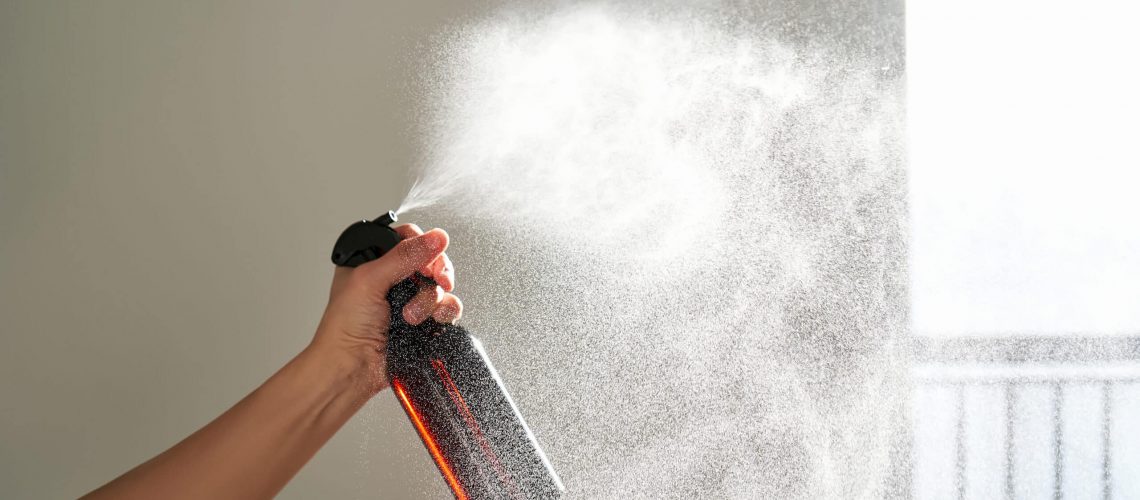
In Oregon commercial spaces, deodorizing without deep cleaning is a temporary fix that leaves the underlying source of odor untouched. Biofilm, grease buildup, and decaying organic matter embedded in surfaces continue releasing odor-causing compounds regardless of what is sprayed on top. Lasting odor control requires deep cleaning that physically removes contamination at its source.
If a building smells bad even after a freshening service, the problem almost certainly lives below the visible surface.
Persistent odors in commercial facilities trace back to three primary sources, and all three share a common characteristic: they are biological, not atmospheric. Spraying a fragrance into the air addresses the air. The biology remains.
Biofilm is the most misunderstood culprit. A biofilm is a structured community of microorganisms, like bacteria, fungi, and their secreted matrix, that adheres to surfaces in wet environments.
Floor drains, trash chutes, grout lines, sink basins, and the interior surfaces of waste containers all provide ideal conditions for biofilm formation. Once established, biofilm is remarkably resistant to standard surface cleaners.
Also, deodorizing products applied to a biofilm-coated surface are absorbed, neutralized, or simply masked within hours, and the smell returns.
Grease accumulation presents a different but equally stubborn challenge. In commercial kitchens, food service areas, and the common spaces of multi-family residential buildings, grease migrates from cooking surfaces and settles into floor joints, wall bases, under equipment, and inside exhaust pathways.
Over time, grease becomes rancid as lipid molecules oxidize and break down into short-chain fatty acids and aldehydes, both of which produce strong, distinctive odors. A mop passes over the top of this layer without disturbing it, and a deodorizer laid on top provides nothing more than a temporary fragrance overlay.
Understanding the biological origin of persistent commercial odors is the first step toward choosing an intervention strategy that will actually work, rather than one that provides a few days of relief before the problem reasserts itself.
Here’s more on why deodorizing isn’t enough.
Table of Contents
Why Does Surface Washing Consistently Fall Short in Commercial Environments?
Standard surface washing serves an important function. It removes surface debris, reduces visible soil, and maintains a baseline level of hygiene that is appropriate for daily upkeep. What standard surface washing doesn’t do is penetrate, emulsify, and extract the layers of biological contamination that drive persistent odor problems in commercial facilities.
A mop, sponge, or standard spray-and-wipe procedure applies cleaning solution to the top of a surface and removes what’s loosened from that surface layer. Biofilm colonies embedded in grout, grease polymerized into floor joints, and organic residue dried onto the interior walls of a trash chute aren’t surface contamination.
Instead, they are subsurface contamination that has bonded chemically and physically to the material beneath. Standard washing tools lack the pressure, the dwell time, and the chemical specificity to reach these deposits.
General-purpose commercial cleaners are formulated to address a broad range of surface soils under routine conditions. They aren’t designed to catalyze the enzymatic breakdown of grease and protein deposits, penetrate biofilm matrices, or sustain the contact time required to dissolve rancid fat deposits in floor joints.
Applying a general cleaner to a biofilm-covered drain and expecting lasting odor control is similar to applying paint thinner to rust. The surface may look better momentarily, but the underlying corrosion continues.
Even if a facility’s routine cleaning program were chemically appropriate for deep contamination, the intervals at which routine cleaning occurs are incompatible with the rate at which biological contamination rebuilds.
Surface washing has an essential role in any commercial facility maintenance program, but that role is maintenance, not remediation, and the distinction matters when persistent odors are the problem.
How Do Turbo Power Washing and Enzyme Cleaners Actually Eliminate Odors at the Source?
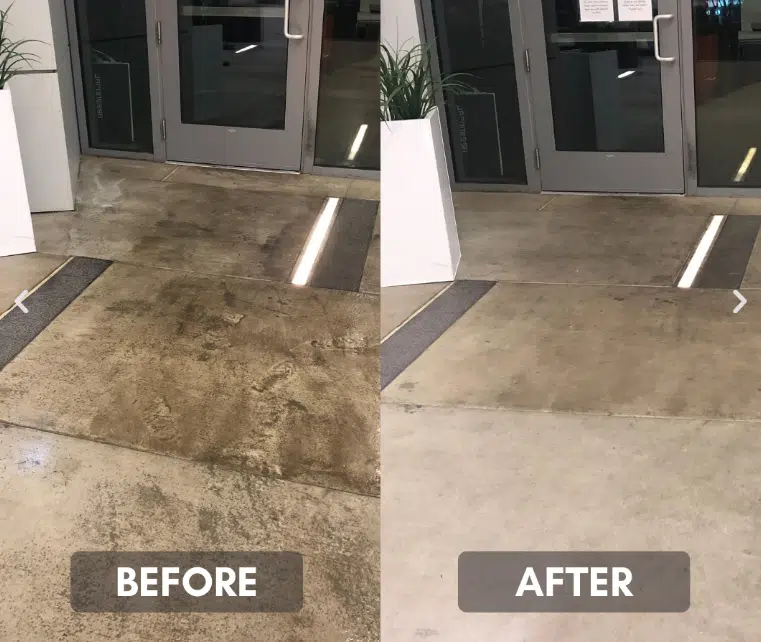
The combination of high-pressure mechanical action and enzymatic chemical treatment is the most effective strategy for eliminating the biological contamination that drives persistent commercial odors
Turbo Power Washing delivers pressurized water at volumes and velocities sufficient to physically break the adhesion of biofilm, emulsified grease, and dried organic deposits from surfaces where they have bonded.
The mechanical force of a Turbo Power Washing system isn’t comparable to that of a standard pressure washer used for exterior cleaning. It’s actually calibrated for interior commercial environments, capable of clearing grout channels, drain interiors, chute walls, and compactor surfaces without damaging the substrate.
The physical disruption of the contamination layer is necessary before deodorizing, or any chemical treatment can be fully effective, because chemical agents applied to intact biofilm or polymerized grease simply react with the outer layer rather than penetrating to the source.
Enzyme cleaners address the chemical. Enzymatic cleaning products contain biological catalysts that catalyze the breakdown of specific molecular bonds in the organic material that causes odor.
Proteases break down protein deposits from food waste and biological fluids. Lipases cleave the molecular bonds in grease and fat, converting rancid lipid deposits into smaller, water-soluble compounds that can be rinsed away. And Amylases address starchy residue.
The sequencing of these two approaches is what makes the combined method so effective. Turbo Power Washing removes the bulk deposit and disrupts the biofilm structure, exposing the contaminated substrate beneath. Enzyme cleaners are then applied with adequate dwell time to catalyze the breakdown of residual material at the molecular level.
The result is a surface that is clean not only visually and mechanically, but biologically, meaning the conditions that generate odor have been eliminated rather than covered by deodorizing.
Real-World Example
A mid-size food service operation in Oregon had been dealing with a persistent odor complaint in its main kitchen and adjacent prep corridor for nearly eight months.
The facility’s cleaning crew did nightly maintenance using a standard commercial degreaser and surface disinfectant, and a deodorizing service applied fragrance-based neutralizers twice weekly.
However, the smell described by staff as a rancid, low-grade grease odor with an underlying sour note, returned within 24 to 48 hours of every treatment.
Fortunately, we identified the source: a combination of polymerized grease that had accumulated in the floor joint seams over an estimated 18–24 months of incomplete removal, and an active biofilm colony established in two floor drains that had never been subjected to pressurized cleaning or enzyme treatment.
A single deep cleaning intervention with Turbo Power Washing across the kitchen floor and drain infrastructure, followed by enzyme cleaner application with a 45-minute dwell time, removed the grease deposit from the floor joints and disrupted the biofilm colony in both drains.
As a result, the rancid odor didn’t return. And the facility subsequently incorporated quarterly deep cleaning of kitchen drains and floor joints into its maintenance schedule.
This illustrates a pattern that repeats across commercial food service environments throughout Oregon: addressing the symptom while the cause remained structurally untouched.
What Does the Data Show About Deep Cleaning Versus Deodorizing Alone?
Facilities that compare deodorizing-only programs against integrated deep cleaning approaches consistently find measurable differences in outcomes across every relevant performance metric. Let’s take a look at that below:
| Performance Metric | Deodorizing-Only Program | Deep Cleaning + Enzyme Treatment + Turbo Power Washing |
| Odor complaint recurrence within 30 days | High (70–85% of treated areas) | Low (10–20% of treated areas) |
| Biofilm re-establishment rate (drains/chutes) | Rapid (3–7 days post-treatment) | Slower (4–6 weeks with enzyme residual) |
| Grease deposit removal | Minimal (surface only) | Substantial (subsurface emulsification) |
| Regulatory or health inspection risk | Elevated (contamination persists) | Substantially reduced |
| Tenant or occupant satisfaction in multi-family | Moderate, temporary improvement | Sustained improvement, documented in reviews |
| Cost per remediation cycle over 12 months | Higher (frequent reapplication) | Lower (less frequent intervention needed) |
| Suitability for trash chute odor control | Temporary masking only | Effective long-term management |
The data makes a consistent argument: deodorizing programs impose ongoing costs, in product, in labor, and in the management overhead of handling repeat complaints, without ever eliminating the underlying problem.
Deep cleaning with the right technology and chemistry is a higher-investment intervention at the point of service, but a lower-cost strategy over any meaningful time horizon.
How Does Multi-Family Portfolio Scale Complicate Commercial Odor Management?
Managing odor in a single commercial building is a solvable problem. Managing it across a national or regional portfolio of multi-family residential properties is a different kind of logistical and operational challenge.
Multi-family residential buildings generate odor conditions at every level of their shared infrastructure. Trash chutes and compactor rooms are the most acute pressure points—high-volume, continuously active, and shared by dozens or hundreds of residents who have varying degrees of awareness about how their waste disposal practices affect building hygiene.
But laundry rooms, parking structures, pet relief areas, fitness centers, and shared corridor carpeting all contribute to the aggregate odor environment that tenants experience and evaluate when deciding whether to renew a lease.
At portfolio scale, the challenge multiplies. A property management company overseeing 50, 100, or 500 multi-family properties across multiple states faces the practical impossibility of managing a different cleaning vendor, a different pest control vendor, and a different odor management vendor at each location.
Apartment odor solutions in OR require not only the right cleaning technology and chemistry, but the right operational model. The properties that score highest on tenant satisfaction surveys and maintain the lowest vacancy rates are, consistently, those managed by companies that have consolidated their facility services under providers capable of operating at portfolio scale.
Real-World Example
A regional property management company overseeing 47 multi-family residential buildings across Oregon and Washington had been managing odor complaints through a patchwork of individual vendor relationships.
Tenant satisfaction surveys conducted across the portfolio consistently ranked odor in shared spaces as the top maintenance concern, with trash chute and compactor room odor cited in 68% of negative reviews mentioning building cleanliness.
After consolidating facility services with us, the company implemented a standardized deep cleaning schedule that included Turbo Power Washing and enzyme treatment for all trash chutes and compactor rooms on a six-week cycle across all 47 properties.
Within two service cycles, odor-related tenant complaints dropped by 61% portfolio-wide. At the three properties with elevated vacancy rates, occupancy improved measurably within one leasing season, with leasing staff reporting that the shared-space odor objection had essentially disappeared from tour conversations.
This didn’t happen because of a better deodorizing product. It happened because we removed the contamination source.
Why Does Fikes Offer the Right Solution for Oregon Facilities Dealing with Persistent Odors?
Fikes operates as a comprehensive facility services provider with the specific combination of capabilities that persistent commercial odor problems require: Turbo Power Washing technology, enzyme-based cleaning programs, trash chute odor control services, and the national operational scale to deliver those services consistently across multi-family residential portfolios of any size.
The Fikes approach begins with source identification. Rather than applying a uniform deodorizing protocol across a facility, our teams assess the specific contamination sources driving odor complaints and build a targeted service plan around those findings.
Also, Turbo Power Washing is a central component of our odor remediation strategy. The mechanical depth that Turbo Power Washing achieves in trash chutes, compactor rooms, floor drains, and kitchen infrastructure clears the contamination load that makes enzyme treatment most effective.
For property management companies operating multi-family residential portfolios across Oregon, we provide the operational infrastructure to deliver these services at scale. Centralized account management, standardized service documentation, and a national service footprint mean that a property in Portland receives the same standard of service as one in Seattle or beyond.
For Oregon businesses and property managers seeking apartment odor solutions in OR that go beyond surface-level deodorizing, we are a partner with the right technology, the right chemistry, and the right operational model to deliver lasting results.
Ready to Go Beyond Deodorizing and Eliminate the Source of the Problem?
Persistent odors in commercial and multi-family residential facilities aren’t a housekeeping problem; they’re a deep cleaning problem. Biofilm, grease accumulation, and organic residue embedded in shared building infrastructure will continue generating odor regardless of how frequently or aggressively a facility is deodorized, because deodorizing addresses the air while the contamination lives in the surfaces.
The path to lasting odor control runs through source elimination and a service program disciplined enough to maintain those results over time. We deliver that program at the property level and at portfolio scale.
Contact us today to connect with a Fikes facility services specialist and request an assessment of your property’s odor management program.