

Commercial restroom sanitation removes bacteria, uric acid crystals, and bio-layers built into grout and porous surfaces, while basic janitorial mopping wipes visible dirt from the surface. For Washington facility owners, a Kaivac no-touch deep-cleaning system reaches what a mop physically can’t, eliminating odor sources rather than spreading them around.
Your restroom looks clean. The floor shines, the mirrors sparkle, and the trash cans sit empty. So why does the smell hit you the moment the door swings open?
That question frustrates facility managers across Washington more than almost any other. The answer has nothing to do with how hard your cleaning crew works. It comes down to the difference between cleaning a surface and sanitizing what’s underneath it.
Let’s dive into what separates daily mopping from true deep cleaning. We’ll also talk about why that gap matters more than most people realize and how a system like Kaivac closes it for good.
Table of Contents
Why Does a Mopped Floor Still Smell Bad?
Mopping moves dirt and liquid across a surface, but it rarely removes what’s absorbed into that surface.
Grout lines, floor seams, and the base of toilets and urinals sit slightly porous, even when they look sealed. Over weeks and months, that porous surface soaks up uric acid, bacteria, and organic residue that a mop head pushes around rather than pulls out.
Uric acid deserves particular attention here. Once it dries, it crystallizes into your flooring and grout at a microscopic level, and those crystals release an ammonia-like odor every time humidity or foot traffic disturbs them.
A standard mop bucket, even filled with disinfectant, glides across the top of those crystals without breaking them down.
Traditional mopping also reuses the same water across an entire restroom, which means bacteria picked up near a urinal gets redistributed toward the sink area with every pass.
What Actually Separates Deep Cleaning from Janitorial Mopping?
Deep cleaning versus janitorial service comes down to a difference in method, not just effort.
Janitorial mopping addresses appearance. It removes visible dirt, restocks supplies, and keeps a restroom presentable between deeper services. On the other hand, deep cleaning targets what’s invisible. The bio-layer of bacteria, mineral deposits, and organic buildup embedded in grout, seams, and porous materials that daily mopping can’t reach.
These are the signs that your restroom needs deep cleaning rather than another round of standard mopping:
- A persistent ammonia or musty smell that returns within hours of routine cleaning
- Grout lines that appear darker or discolored despite regular mopping
- Visible buildup around the base of toilets, urinals, or floor drains
- Complaints from staff or visitors that continue even after a “clean” restroom inspection
- A restroom that looks spotless but still tests positive for high bacteria counts during audits
Each of these signs points to organic material sitting below the surface, out of reach for a mop and standard disinfectant.
Real-World Example
A mid-rise office building near downtown Seattle was getting an overwhelming number of odor complaints about the fourth-floor restroom every few weeks, despite a janitorial crew mopping and disinfecting it nightly.
When the property manager called us, our team ran a bacterial swab test along the grout lines and floor seams near the urinals and found uric acid crystallization far beyond what surface cleaning could touch.
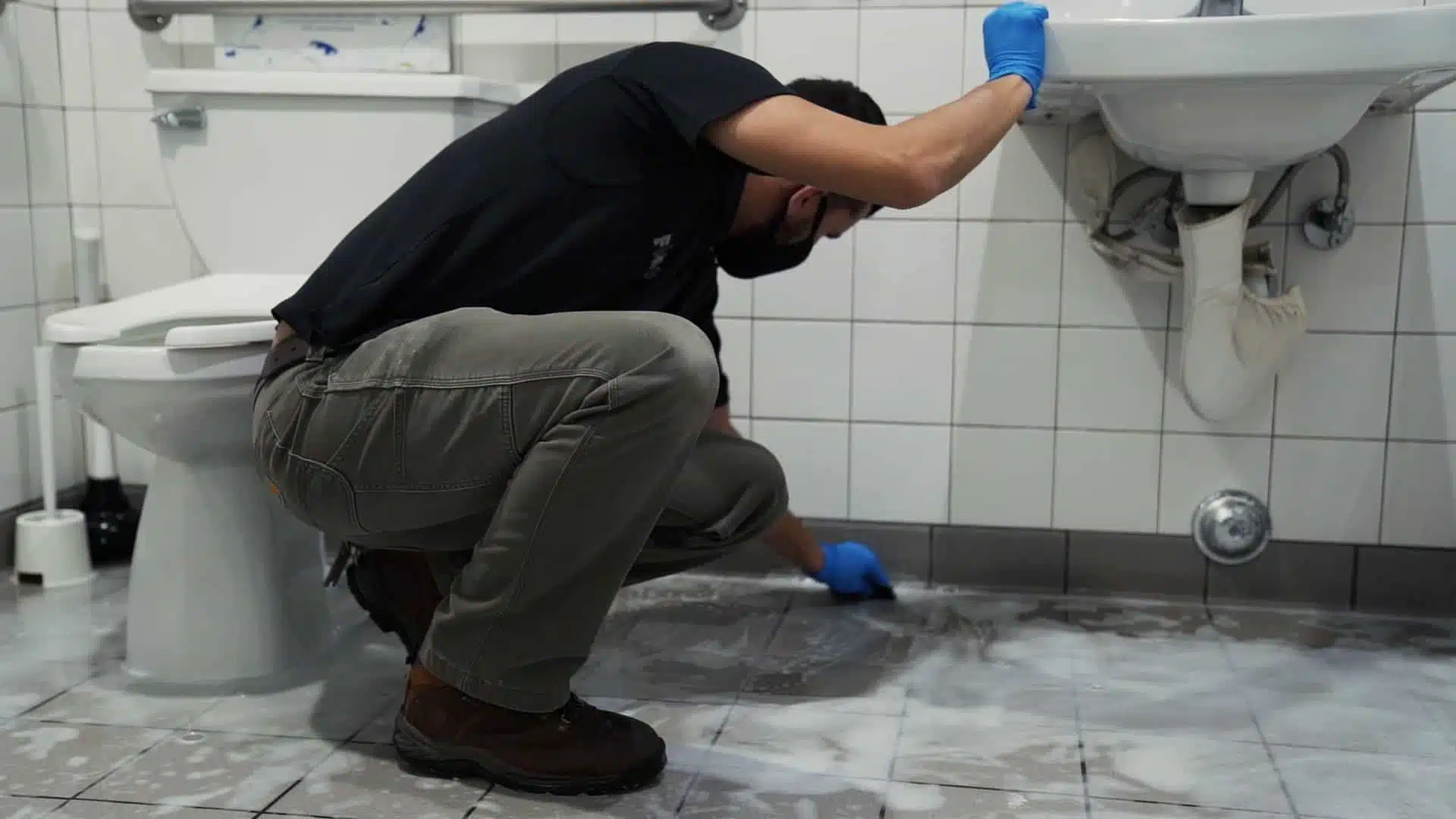
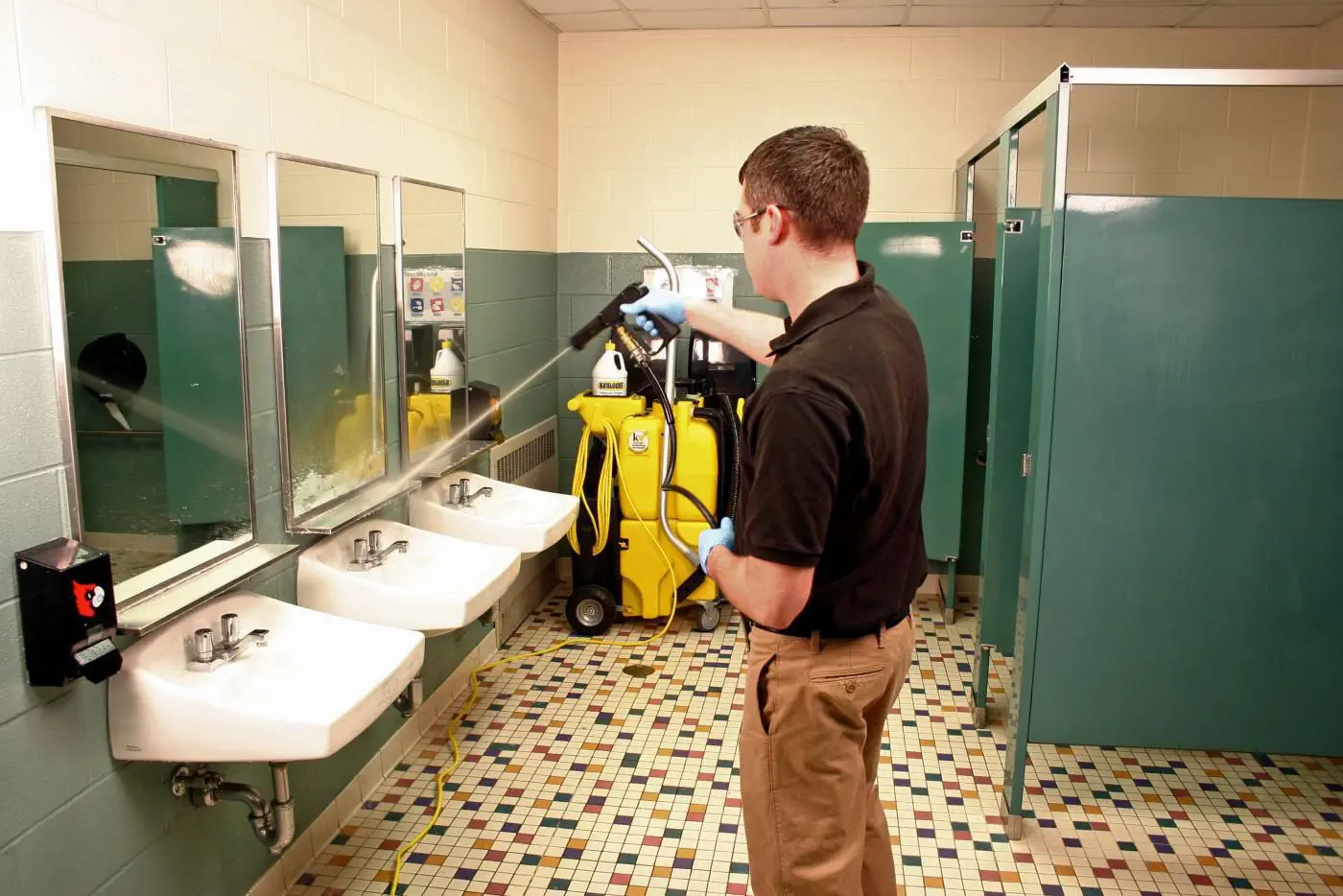
We brought in our Kaivac no-touch system, which flushes pressurized cleaning solution into grout and seams, then vacuums the soiled water back out rather than pushing it around the floor.
The odor cleared within a single treatment, and the building now schedules quarterly Kaivac service to keep it from building back up. They learned that a restroom can pass a visual inspection and still carry a bacteria load that only deep cleaning addresses.
What Should Go on Your Restroom Deep Cleaning Checklist?
Building a real restroom deep cleaning checklist means going beyond what a daily mop covers. If your facility handles this internally, or you want to understand what a professional visit should include, a thorough checklist covers the areas standard cleaning tends to skip.
A solid restroom deep cleaning checklist includes:
- Pressurized flushing of grout lines and floor seams to lift embedded bacteria and mineral buildup
- Extraction cleaning that vacuums soiled water rather than spreading it across the floor
- Descaling around toilet and urinal bases where uric acid crystals accumulate most heavily
- Disinfection of high-touch surfaces like flush handles, faucet handles, and stall latches with hospital-grade solution
- Drain and floor sink treatment to address odor sources hidden below visible surfaces
- Air quality testing or bacterial swabbing to confirm the treatment actually resolved the underlying issue
Facilities that build these steps into a recurring schedule, rather than treating commercial restroom sanitation and deep cleaning as a one-time emergency fix, see far fewer odor complaints across the year.
How Does Kaivac Compare to Traditional Mopping and Disinfecting?
The gap between a mop bucket and a true no-touch system becomes clear once you line the two up side by side. Traditional methods rely on manual scrubbing and reused water, while a system like Kaivac uses pressurized application and extraction to pull contaminants out rather than spread them.
| Method | Reaches Porous Surfaces | Cross-Contamination Risk | Odor Elimination | Labor Required |
| Standard mopping | No | High, reused water | Temporary masking | Low, daily |
| Manual scrubbing with disinfectant | Partial | Moderate | Short-term relief | High, staff time |
| Chemical descaling products | Partial | Low | 1–2 weeks | Moderate |
| Kaivac no-touch deep cleaning | Yes | Minimal, fresh solution per pass | 60–90 days | Minimal, scheduled service |
Standard tools handle daily maintenance well, but they weren’t built to pull bacteria and mineral crystals out of porous surfaces. A no-touch system applies fresh cleaning solution under pressure, agitates it into grout and seams, then extracts everything, contaminants included, into a separate recovery tank instead of a mop bucket.
Real-World Example
A manufacturing facility in Tacoma where hundreds of employees rotate through shift changes and share a bank of restrooms around the clock reached out to us for help with their restroom.
The facility manager increased mopping frequency to three times daily after repeated complaints, but the odor and visible grime along the floor seams kept returning within hours.
We assessed the restroom and found the high-traffic, continuous-use pattern had pushed bio-layer buildup deep into the tile grout faster than any mop schedule could keep pace with.
We ran a full Kaivac treatment across every restroom in the facility and set up a recurring bi-weekly deep cleaning service to match the round-the-clock usage pattern. Complaints dropped to near zero within the first month, and the facility manager now points to that shift as proof that more mopping isn’t the same as professional commercial restroom sanitation.
Why Should You Choose Fikes for Commercial Restroom Sanitation?
At Fikes, we bring your facility a level of commercial restroom sanitation that goes beyond what a standard janitorial crew can offer on their own.
We rank among the professional restroom hygiene companies serving Washington that reach the grout lines, seams, and porous surfaces where bacteria and uric acid crystals build up, removing the source of stubborn odors rather than covering them up between visits.
As a comprehensive facility services and product provider, we pair this deep cleaning approach with a service schedule built around your facility’s actual traffic patterns, whether that means monthly, quarterly, or something more frequent for high-use restrooms.
What’s the Right Next Step for Your Facility Restroom?
Restroom odor and hygiene complaints rarely resolve themselves through more frequent mopping.
The bio-layers and uric acid crystals driving those complaints sit below the surface, in a place standard cleaning tools were never designed to reach. Facilities that treat deep cleaning as a routine part of their maintenance schedule, rather than a last resort, avoid the cycle of recurring complaints altogether.
Book a restroom assessment with us today so that we can pair your team’s daily cleaning routine with scheduled Kaivac deep cleaning and build a commercial restroom sanitation plan that keeps smells away and customers happy.