
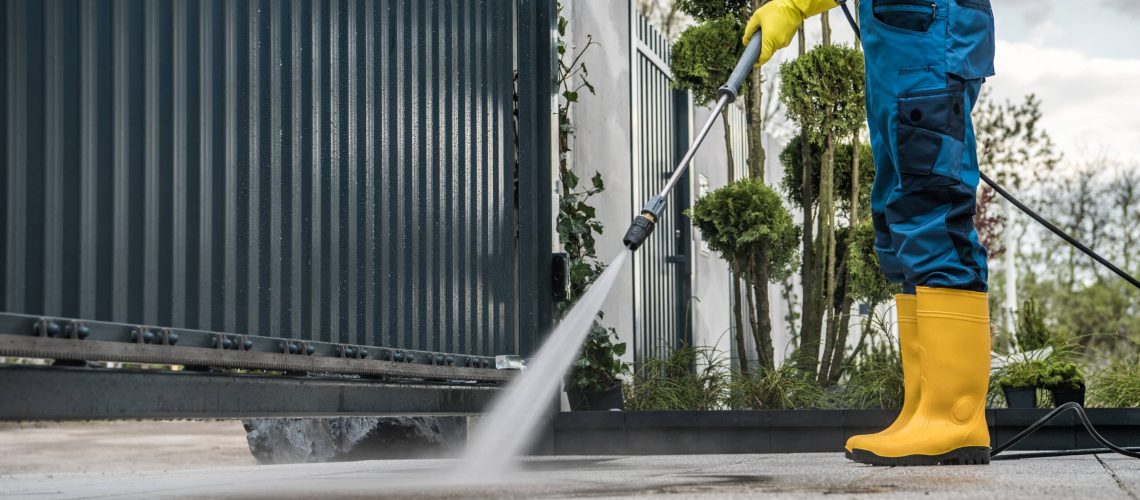
For Oregon commercial property owners, July marks the point where summer heat transforms ordinary grease and grime into a baked-on hazard, turning porous concrete into a magnet for slip-and-fall accidents and pest activity. Commercial pressure washing during this window lifts embedded stains, restores traction, and removes the food sources that draw ants and rodents toward a building.
Concrete looks solid, but underneath that gray surface sits a network of tiny pores, similar to a sponge frozen mid-pour. Under normal conditions, those pores hold moisture and resist staining fairly well. But once temperatures climb into the 80s and 90s, something changes. Heat opens those pores wider, and any grease, oil, or organic residue sitting on the surface gets pulled downward, almost as if the concrete is breathing it in.
This is the reason a dumpster pad that looked manageable in April can appear permanently stained by the middle of July. The grease isn’t sitting on top anymore. It’s worked its way into the material’s structure. Western Oregon’s combination of wet winters and dry, hot summers makes this cycle particularly pronounced. Months of moisture regularly affect the concrete’s surface chemistry, and sustained heat then acts like a kiln, locking organic matter in place before a single rinse ever touches it.
If you wait until autumn to address summer buildup, you’ll typically find that surface-level cleaning no longer works. The stain has become part of the slab. Let’s take a deeper look at why July is peak season for commercial pressure washing.
Table of Contents
Why Doesn’t a Garden Hose or Standard Mop Solve the Problem?
A hose delivers water at roughly 40 to 60 PSI from a typical spigot. That pressure pushes loose dirt and dust around, which works fine for a sidewalk that sees nothing heavier than foot traffic and rainwater. Grease baked into concrete by summer heat behaves differently. It bonds chemically with the surface, and low-pressure water simply glides over it without breaking that bond.
Mopping introduces a second problem: it spreads the contaminant rather than removing it. A mop dragged across an oily loading dock redistributes grease across a wider area and pushes residue into joints and expansion cracks, where it continues feeding bacteria and odor. Anyone who has watched a maintenance crew mop a stained patio and seen the stain reappear within days has witnessed this firsthand.
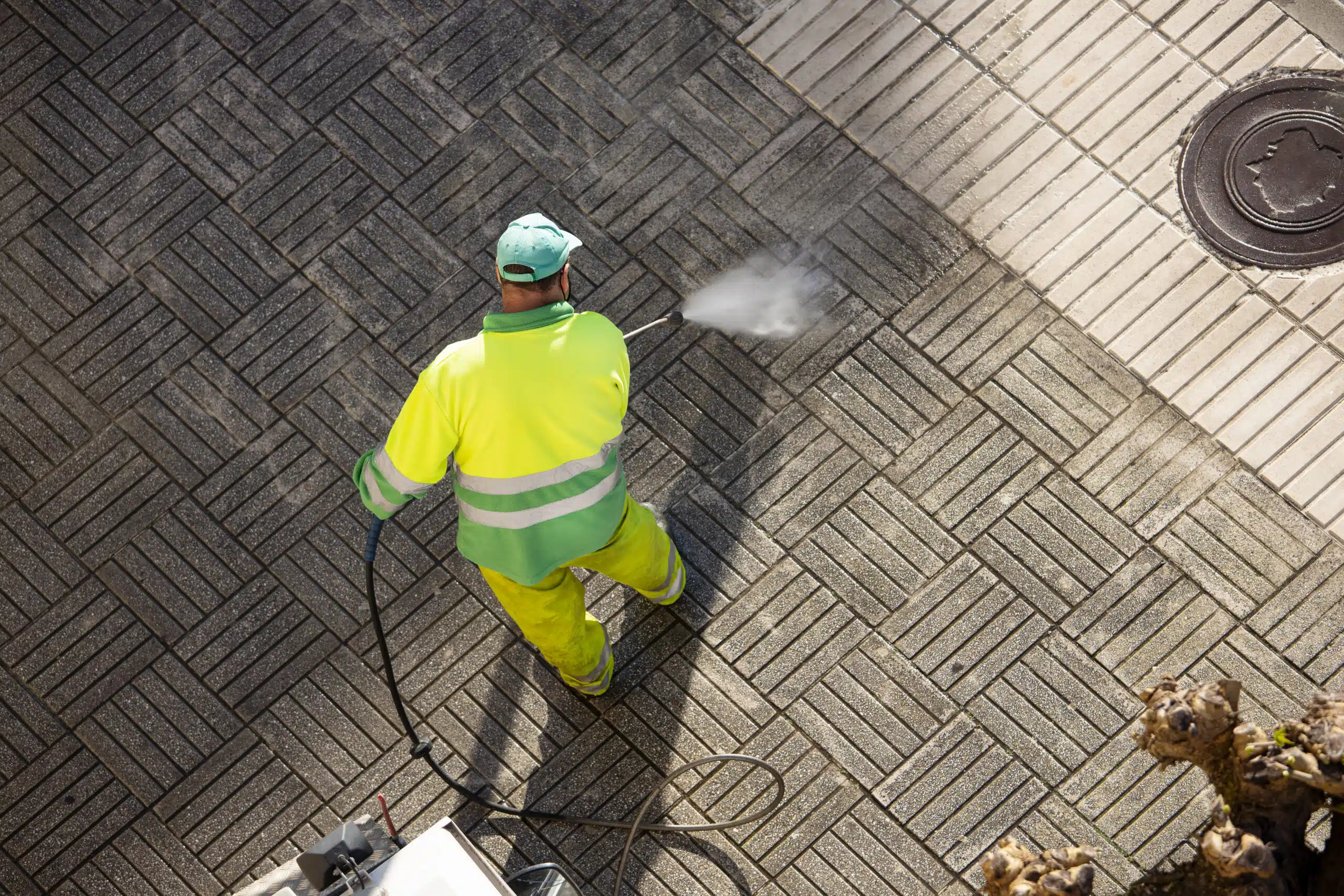
Professional exterior building washing relies on a combination of heated water, calibrated pressure (typically 3,000 PSI or higher for commercial concrete), and degreasing agents formulated for organic buildup. The heat re-softens what summer baked in, the pressure physically dislodges it, and the degreaser breaks the molecular bond holding grease to the pores. None of those three elements exist in a garden hose or a mop bucket.
Real-World Example
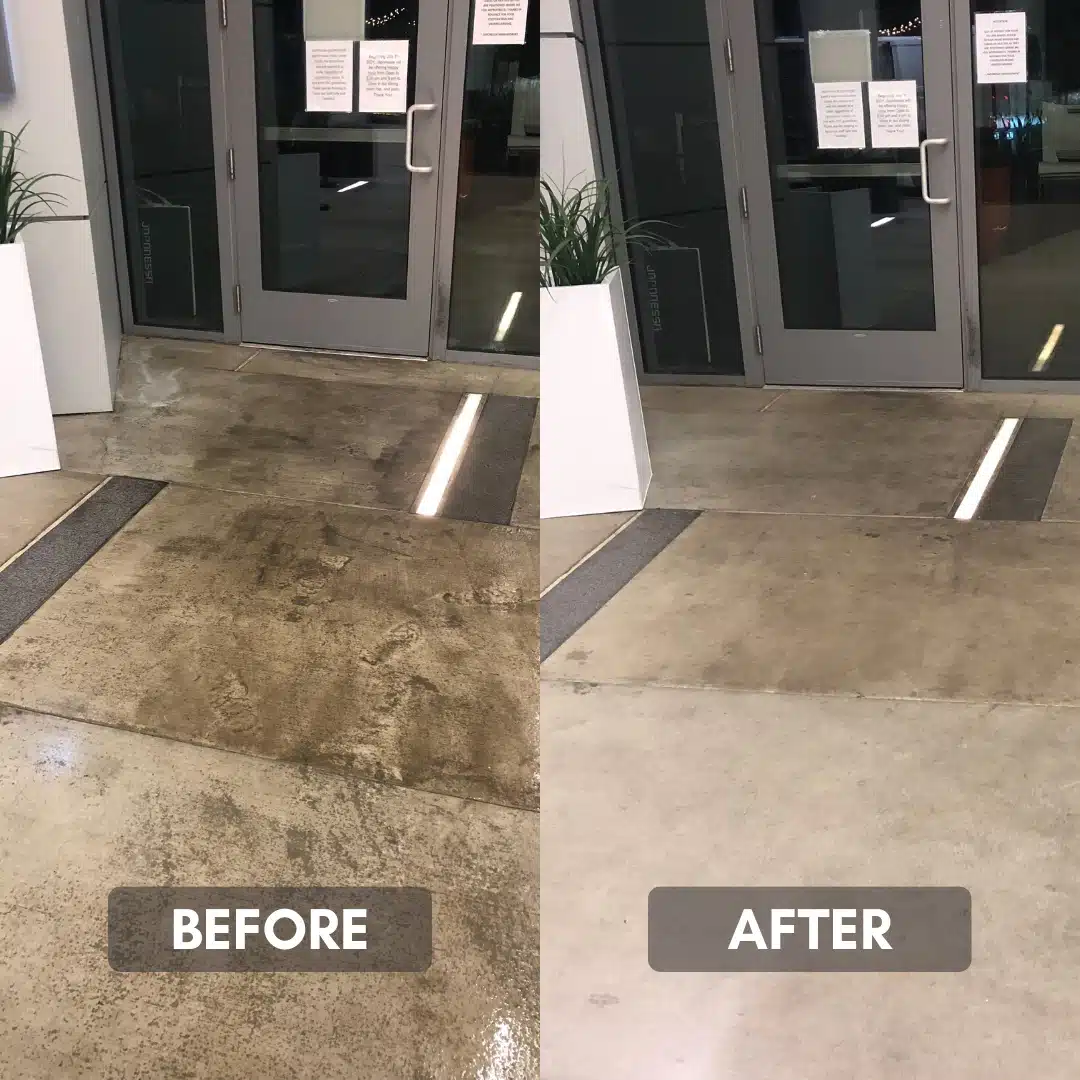
A regional grocery chain in the Portland metro area noticed a persistent dark stain spreading across the asphalt and concrete apron near its rear loading dock each July. Store staff had been hosing the area down weekly, assuming routine maintenance would handle it. But the stain only grew darker and wider.
So, they reached out ot us, and one of our professional crews got to work. We used hot-water pressure washing to remove three seasons of compacted grease in a single visit, something the store’s standard hose-and-broom routine had never managed to touch.
How Does Commercial Pressure Washing Prevent Slip-and-Fall Injuries?
Grease and oil residue create one of the most overlooked liability risks for commercial properties. A stain that appears purely cosmetic during a routine walkthrough can become a genuine hazard once afternoon heat softens the grease and a light rain or condensation adds moisture on top. The combination produces a surface with dramatically reduced traction, particularly around loading docks, kitchen exits, and dumpster enclosures where foot traffic and grease exposure overlap most.
Insurance claims related to slip-and-fall incidents on commercial property regularly cite “unseen” or “unmarked” surface hazards, and a grease-laden concrete patch rarely looks dangerous until someone has already fallen on it. Routine commercial pressure washing addresses this risk before it materializes by removing the residue that creates the slick surface in the first place, rather than waiting for an incident report to identify the problem.
Restaurants, grocery stores, distribution centers, or any facility with regular food or oil handling carry elevated exposure here. The cost of a quarterly or monthly pressure washing service sits well below the cost of a single liability claim, let alone the legal and reputational fallout that follows an injury on the property.
How Does Buildup Attract Ants, Rodents, and Other Pests?
Pest control and exterior cleaning rarely get discussed together, but the connection runs deep. Ants, in particular, follow scent trails toward food sources with remarkable persistence, and a grease-coated dumpster pad or food-service exterior wall functions as a continuous food source throughout the summer months. Once an ant colony establishes a reliable trail to a building’s exterior, the next step toward the interior commonly follows quickly through door gaps, utility penetrations, or window seals.
Rodents respond to the same signals. Mice and rats forage based on smell, and a building surrounded by weeks of accumulated food residue, spilled syrup near a beverage dock, grease near a kitchen exhaust vent, or unwashed trash enclosure walls sends a clear signal that food is reliably available nearby. Pest management professionals note that buildings with unaddressed grease and organic buildup show measurably higher pest activity than comparable properties with regular exterior washing.
Real-World Example
A multi-tenant retail center in the Salem area experienced a recurring rodent issue near its shared dumpster corral despite quarterly pest control visits. The property’s facilities team eventually identified the root cause: months of grease and food residue had accumulated on the concrete pad beneath and around the dumpsters, effectively serving as a feeding ground regardless of how frequently traps were set.
Adding a commercial pressure washing schedule with us alongside the existing pest control contract resolved the activity within one cleaning cycle, illustrating how exterior sanitation and pest prevention work as two sides of the same maintenance strategy.
What Should a Dumpster Pad Cleaning Checklist Include?
Dumpster pads deserve particular attention during July, given their combination of grease exposure, food waste, and heavy foot and vehicle traffic. A thorough dumpster pad cleaning checklist generally includes the following steps:
- Clear the area of loose debris, cardboard, and trash before washing begins, so pressure washing equipment can reach the actual concrete surface.
- Apply a commercial-grade degreaser to visible grease and oil stains, allowing dwell time before rinsing.
- Use hot-water pressure washing at a minimum of 3,000 PSI to lift embedded grease from concrete pores.
- Rinse runoff into an approved containment or drainage system, since many municipalities regulate wastewater from commercial cleaning.
- Inspect joints, cracks, and the base of dumpster enclosures for residue that standard washing may miss.
- Apply a concrete sealer periodically to reduce how deeply future grease can penetrate the surface.
Skipping any of these steps tends to shorten how long a cleaning lasts, particularly the degreaser dwell time and the sealer application, both of which directly affect how resistant the concrete is to the next round of summer heat.
How Should Commercial Property Owners Compare Cleaning Methods?
Choosing the right method for a given surface and stain type makes a measurable difference in results and cost over time. The table below outlines how common cleaning approaches compare on the factors that matter most for commercial concrete.
| Cleaning Method | Effective on Baked-In Grease | Typical PSI | Risk of Surface Damage | Best Use Case |
| Garden Hose | Minimal | 40–60 | Low | Light dust, loose dirt |
| Mop & Bucket | Minimal (spreads residue) | N/A | Low | Indoor spot cleaning |
| Consumer Pressure Washer | Moderate | 1,500–2,000 | Moderate (DIY misuse) | Small residential patios |
| Professional Commercial Pressure Washing | High | 3,000+ (typically hot water) | Low (operator-controlled) | Dumpster pads, loading docks, building exteriors |
The pattern here is straightforward: as PSI and water temperature increase under trained operation, effectiveness against embedded grease rises while damage risk actually decreases, since professional equipment and technique apply the correct pressure for each surface type rather than a single uniform setting.
Why Should Oregon Property Owners Partner With Fikes for Commercial Pressure Washing?
Coordinating exterior cleaning, pest prevention, and facility maintenance across multiple vendors becomes a logistical burden during the busiest months of the year. Fikes addresses this by offering commercial pressure washing alongside a broader range of facility services, allowing you to schedule dumpster pad cleaning, building exterior washing, and related maintenance through a single, accountable provider rather than juggling separate contracts.
Our technicians understand how Oregon’s wet-to-dry seasonal shift affects concrete, and we bring the equipment, hot-water systems, and commercial-grade degreasers needed to remove grease that has already worked its way into porous surfaces. For property managers overseeing retail centers, restaurants, distribution facilities, or office campuses, that local knowledge translates into cleaning schedules timed to actual conditions on the ground rather than a generic calendar.
A property washed at the right point in summer holds its appearance and traction far longer than one cleaned reactively after a complaint or incident.
What’s the Best Next Step for Property Owners This July?
Summer heat will keep baking grease into concrete whether or not a cleaning plan exists, and the surfaces affected, loading docks, dumpster pads, sidewalks, and building exteriors, sit at the intersection of safety, pest control, and curb appeal. Addressing the problem with how to clean commercial concrete the right way, using heat, pressure, and the correct chemistry, costs far less than the liability, pest infestation, or reputational damage that follows neglect.
Those who schedule professional commercial pressure washing and cleaning before the peak of summer heat protect both their tenants and their bottom line.
Schedule a property assessment with us today to establish a clear starting point for commercial pressure washing and cleaning, so that you can turn a seasonal vulnerability into a manageable part of your routine facility care.