

For Colorado facility managers, a restroom that still smells “off” despite daily janitorial cleaning signals odor trapped below the visible surface, in grout, drains, and behind fixtures, rather than a failure of routine cleaning. Summer deep cleaning services target these hidden sources, restoring true cleanliness and eliminating commercial restroom odor at its origin.
Walk into a restroom an hour after the janitorial crew finishes, and the surfaces gleam. The mirrors shine, the floor looks freshly mopped, and the trash has been emptied. Yet somehow, a faint sour or ammonia-like smell lingers near the urinals, or a musty note rises from the floor drain every time someone runs water nearby. This disconnect frustrates facility managers more than almost any other maintenance issue, because the visible evidence says the restroom is clean while the nose insists otherwise.
The reason comes down to the difference between what daily cleaning removes and where odor-causing buildup collects. A mop, spray bottle, and quick wipe-down clean the surfaces a custodian can see and reach during a five-to-ten-minute pass through each stall.
However, daily cleaning often misses porous grout, the area under the toilet base, and deeper parts of floor drains. These spots can trap organic waste, urine salts, bacteria, and mineral deposits. Over time, this buildup grows until it creates strong odors, even when the visible surfaces look clean.
Summer can make the problem much worse. Warm temperatures help bacteria grow faster and cause odor-causing compounds to spread into the air more quickly. This means buildup that went unnoticed during a cooler Colorado winter can produce strong smells as temperatures rise and more people use the restrooms during summer events and seasonal activities.
A facility that smelled fine in March may have a serious odor problem by July, even if the daily cleaning routine has not changed. The hidden buildup has simply reached a point where the smell becomes hard to ignore.
Let’s discuss how summer deep cleaning services rescue high-traffic restrooms.
Table of Contents
What Does the Anatomy of a True Deep Clean Look Like?
A deep clean differs from daily cleaning in scope, tools, and target areas, not merely in how hard someone scrubs. Where daily cleaning treats the restroom as a series of visible surfaces, deep cleaning services treat it as a system of porous materials, hidden cavities, and mechanical fixtures that each accumulate residue differently.
The areas most commonly missed by daily routines include the following:
- Behind and beneath toilets and urinals, where splash residue and dust combine into a layer daily mopping rarely disturbs
- Floor drains and trap seals, which trap organic debris and develop biofilm that produces a sewer-like odor when the trap runs dry or fills with sediment
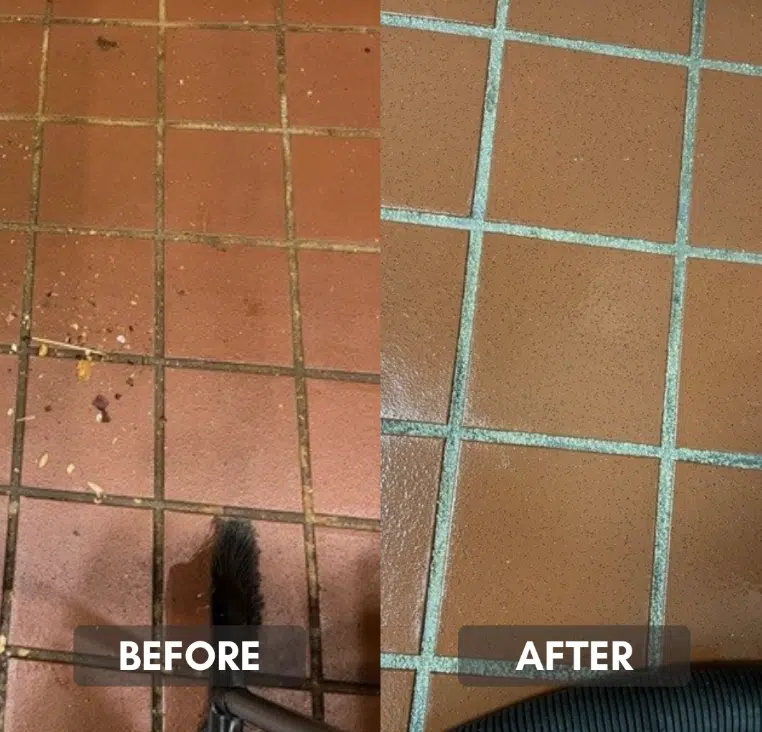
- Grout lines and porous tile, which absorb moisture and urine salts over months, holding odor at a level standard surface cleaning never extracts
- Wall-to-floor junctions and caulk seams, where moisture collects and mold or mildew establishes a foothold unnoticed
- Partition hinges, vent covers, and the underside of soap and paper dispensers, surfaces that rarely receive attention during a quick daily pass
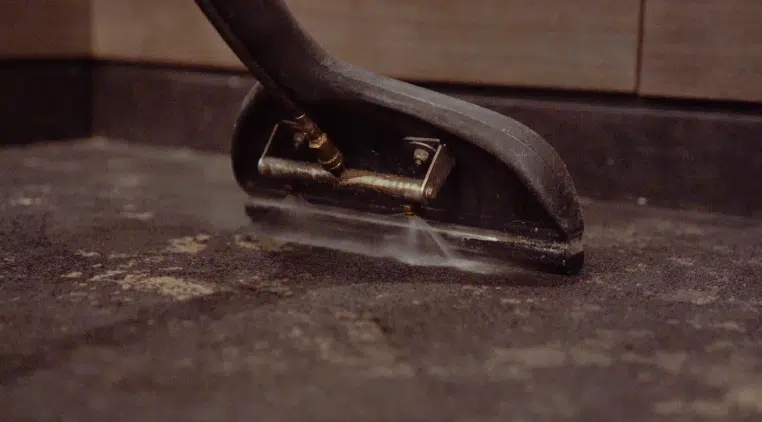
A genuine deep clean addresses every item on that list with specialized tools: extraction equipment for grout and porous tile, drain treatment that reaches several feet into the trap, and degreasing or enzymatic agents formulated to break down organic buildup rather than just mask it with fragrance.
Fragrance sprays and daily disinfectant wipes treat the symptom; deep cleaning services address the source.
Real-World Example
A Denver-area office tower with a high-traffic ground-floor restroom received repeated tenant complaints about a persistent odor despite a janitorial contract that included daily cleaning. Facility staff replaced air fresheners and increased mopping frequency for months with no improvement.
A deep cleaning assessment by us found the floor drain trap had run dry from infrequent use during a partial building closure, allowing sewer gas to rise directly into the restroom, while years of urine salt buildup had saturated the grout around the urinals.
Refilling the trap and performing a full grout extraction resolved the odor within a single service visit, something no amount of daily mopping could have achieved.

How Does Molecular-Level Sanitizing Actually Work?
Standard disinfecting wipes and sprays kill bacteria and viruses on the surfaces they touch. However, they may leave behind organic waste, mineral buildup, and residue trapped in porous materials. Bacteria can grow back in these areas within days.
Molecular-level sanitizing takes a different approach. Instead of cleaning only the visible surface, it targets the bonds that hold odor-causing residue to materials like grout, concrete, and tile. This helps loosen the buildup so it can be removed instead of simply wiped around.
Fikes uses a combination of high-temperature cleaning, enzyme treatments, and antimicrobial products to tackle this buildup. Enzymes break down organic waste at its source, while antimicrobial products can continue working on treated surfaces after cleaning is complete.
Enzymes are especially useful for restroom odor control. They keep breaking down trapped urine salts and biofilm for hours after application. This allows them to reach residue inside grout and concrete pores that a quick wipe-down cannot reach.
This deep cleaning process gives facility managers a clean starting point. Once hidden buildup is removed, daily cleaning can keep restrooms in better condition instead of constantly fighting old residue. It also makes routine maintenance more effective over time.
Without this deeper cleaning, custodial teams may keep cleaning the same surfaces without reaching the source of the problem. No matter how carefully they work, odors can return as long as buildup remains trapped below the surface.
How Should Facility Managers Compare Cleaning Approaches?
Choosing the right cleaning frequency and method depends on understanding what each approach reaches and what it misses. The table below compares standard daily janitorial cleaning against periodic deep cleaning services across the factors that matter most for restroom odor and sanitation.
| Factor | Daily Janitorial Cleaning | Periodic Deep Cleaning Services |
| Surface Cleaning | Strong (mirrors, counters, floors) | Strong, with added extraction |
| Grout & Porous Tile | Minimal penetration | Full extraction and treatment |
| Floor Drains & Traps | Rarely addressed | Treated and inspected |
| Odor Source Removal | Masking via fragrance | Removal via enzymatic breakdown |
| Recommended Frequency | Daily | Quarterly, or monthly for high-traffic sites |
| Long-Term Odor Control | Temporary | Sustained |
Daily cleaning keeps a restroom presentable on a day-to-day basis, while periodic deep cleaning services address the structural buildup that daily work was never designed to reach in the first place.
Facilities that rely exclusively on one approach typically encounter the gap described earlier: a restroom that looks clean but doesn’t smell clean.
Why Do High-Traffic Restrooms Need a Summer-Specific Maintenance Plan?
Restroom usage patterns shift considerably during summer months, particularly for facilities tied to seasonal activity: shopping centers with increased foot traffic, office buildings hosting summer interns and events, schools running summer programs, and recreational or hospitality facilities operating at peak capacity.
More visitors translate directly into more restroom usage, faster depletion of supplies, and accelerated buildup in the exact areas a daily routine struggles to reach.
A summer facility maintenance plan accounts for this seasonal surge by adjusting deep cleaning frequency upward during the months when traffic and temperature combine to accelerate odor development.
A facility that performs quarterly deep cleaning during the rest of the year regularly benefits from a monthly cadence through summer, particularly for restrooms serving public-facing areas with unpredictable visitor volume.
Real-World Example
A Colorado Springs recreation center with seasonal pool and camp programming saw restroom complaints climb every June, coinciding with the start of summer camp enrollment.
The facility’s maintenance team had followed the same quarterly deep cleaning schedule used during the slower fall and winter months, which left a four-month gap during the period of heaviest use.
Shifting to monthly deep cleaning services with us for June through August, paired with additional drain maintenance, eliminated the recurring complaint pattern the following summer, demonstrating how aligning service frequency with actual usage patterns resolves problems that a fixed year-round schedule misses.
How Can Fikes Help Facility Managers Solve Restroom Odor for Good?
Finding the gap between daily cleaning and deep sanitation requires knowing where restroom odors come from and having the right equipment to remove the buildup.
Fikes helps facility managers across Colorado with deep cleaning services designed to reach areas that standard janitorial work often misses. These include floor drains, grout lines, the undersides of fixtures, and porous materials that trap odors even after visible surfaces have been cleaned.
Our deep cleaning solutions combine molecular-level sanitizing with a schedule based on each facility’s needs. Instead of using the same quarterly schedule for every building, we consider how many people use the space and when traffic is heaviest.
For a shopping center, office tower, or recreation facility that sees more visitors in summer, this means planning extra cleaning when buildup is most likely to increase. A flexible schedule helps keep restrooms clean during busy periods instead of relying on a fixed plan that may not meet demand.
When facility managers work with us, they gain a clearer understanding of what daily cleaning can handle and what needs deeper treatment. By combining both approaches, they can keep restrooms looking and smelling clean throughout the year.
What’s the Next Step for Facility Managers This Summer?
A restroom that smells “off” despite a diligent daily cleaning routine points to buildup hidden below the surface, not a failure of the janitorial staff doing the visible work.
Grout lines, floor drains, and fixture undersides hold the residue that daily mopping was never equipped to reach, and summer heat accelerates the process until the odor becomes impossible to ignore.
Facility managers who schedule deep cleaning services ahead of peak summer traffic address the problem at its source rather than masking it month after month with fragrance and extra mopping.
Reach out to us today for a restroom assessment that offers a clear starting point that restores a true baseline of cleanliness and keeps it that way through the busiest months of the year.