

Trash chute cleaning services prevent fires by removing grease and organic waste that builds up inside chutes and ignite easily. Professionals combine heated power washing with enzyme treatments and safety checks on doors and fire dampers. Regular cleaning also helps buildings meet NFPA 82 requirements and municipal health codes.
Your trash chute is the most overlooked fire hazard in your building, and it runs straight through every floor.
Tenants toss in greasy pizza boxes, food scraps, and bagged garbage without a second thought, and gravity does the rest. Over months and years, that residue clings to the chute walls, hardens into a flammable film, and feeds bacteria that create odors you can smell from the hallway.
One stray cigarette or electrical spark can turn that buildup into a vertical channel for flames. Beyond the fire risk, a neglected chute invites pests, triggers tenant complaints, and can put you at odds with municipal health inspectors.
The good news is that professional trash chute cleaning solves all of these problems at once.
Understanding the ins and outs of garbage chute cleaning, what the codes expect, and how to compare trash chute cleaning companies will help you protect your residents and your reputation long before an inspector or an emergency forces the issue.
Table of Contents
What Makes a Dirty Trash Chute a Fire Hazard?
A trash chute works like a chimney. It’s a tall, enclosed shaft that pulls air upward, and anything flammable coating its walls gets plenty of oxygen if a spark appears.
Cooking grease is the main culprit. It splatters out of leaking bags, hardens into a sticky layer, and traps paper, plastic, and food particles against the steel. Organic waste adds moisture that breeds bacteria and mold, and decomposing material generates heat and gas as it breaks down.
In multi-family residential and commercial high-rises, a fire that starts on a lower level can climb the shaft and reach upper floors within minutes. Smoke follows the same path, which puts residents at risk even when the flames stay contained.
A clean chute starves a fire of fuel, so regular trash chute maintenance is one of the most cost-effective safeguards you can add to your building. Removing the buildup removes the hazard.
What Does NFPA 82 Require for Trash Chutes?
NFPA 82 is the national standard covering waste and linen handling systems, including the chutes, intake doors, and fire protection features that make them safe to operate.
Local fire marshals and health departments typically adopt or reference it, so the exact requirements depend on your jurisdiction and building type.
In general, the standard expects chutes to be built from noncombustible materials, fitted with properly functioning access doors, and protected by fire suppression such as sprinklers. It also expects those components to be inspected and maintained so they work when you need them.
A chute coated in grease can undermine every one of those safeguards, because heavy residue can interfere with door latches and sprinkler coverage. Health codes add a second layer by expecting sanitary conditions, odor control, and pest prevention.
Meeting these standards isn’t a one-time achievement. It’s a continuing responsibility, and dated service records give you proof of compliance whenever an inspector asks.
How Does Professional Trash Chute Cleaning Work?
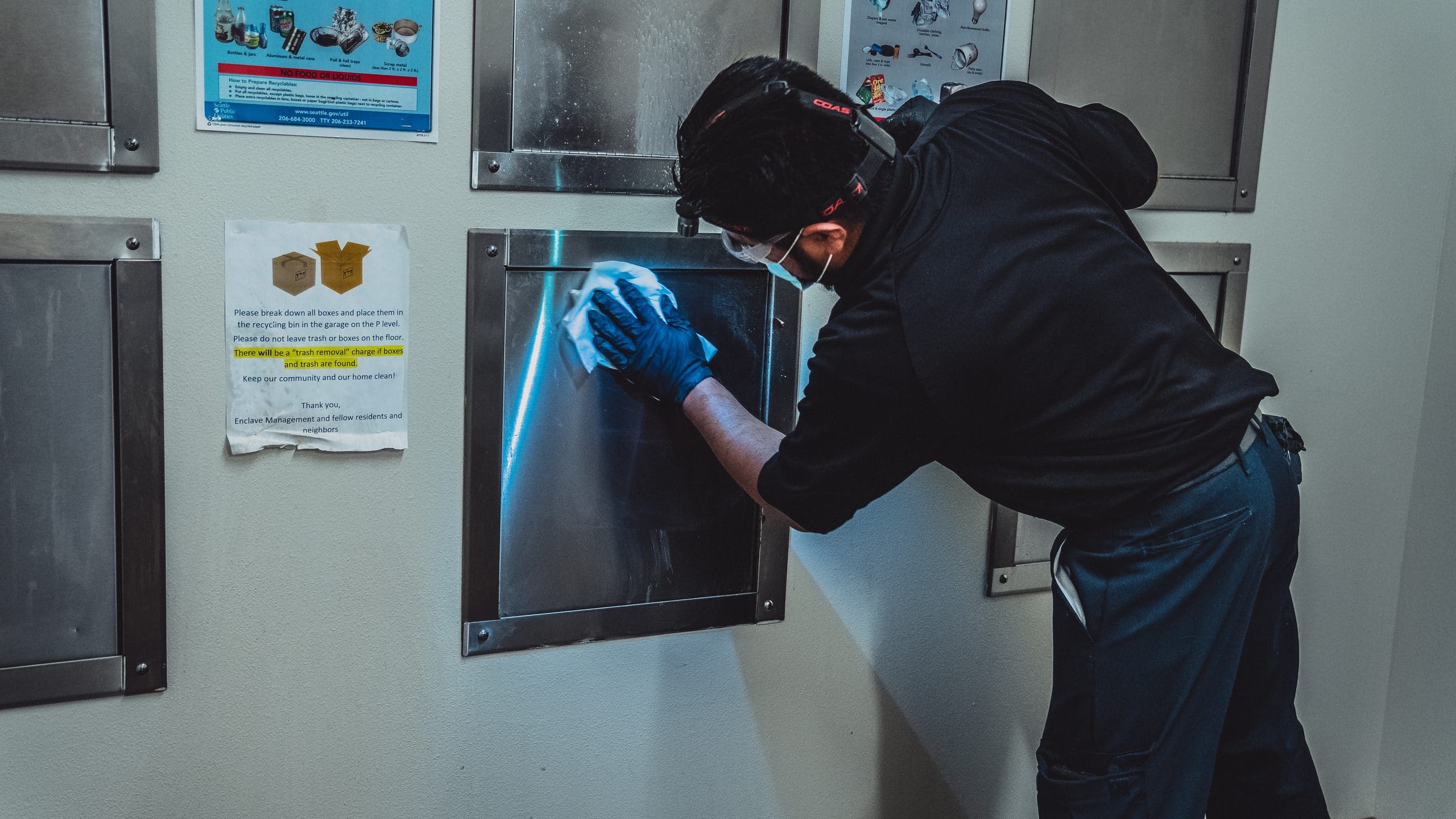
Professional trash chute cleaning services go far beyond a mop and bucket. Technicians use specialized equipment that travels the full height of the shaft, scrubbing and rinsing every surface from the top-level hopper to the compactor room.
The process starts with an inspection to document conditions and flag damaged components. Next comes high-pressure, heated power washing, which melts and strips away the greasy film that cold water can’t touch.
Crews then apply enzyme treatments that break down organic residue left in seams and corners, and these treatments neutralize odors at the source instead of masking them. Finally, technicians collect and properly dispose of the wastewater and debris, then complete a closing inspection to confirm the shaft is clean and functional.
A thorough cleaning removes the fuel for a fire and the food source for pests in a single visit.
Real-World Example
We worked with an 18-story apartment tower where upper-floor residents complained about a persistent sour smell and the maintenance team kept finding roaches near the compactor room.
Janitorial wipe-downs of the intake doors hadn’t touched the buildup hidden inside the shaft. We sent a crew to power wash the chute from top to bottom with heated water, applied an enzyme treatment to break down the organic film, and documented the work with before-and-after photos.
Fortunately, the odor complaints stopped, and the property manager had a clean record to show the next inspector.
Which Safety Components Should You Inspect on a Trash Chute?
Cleaning is only half the job. Every trash chute relies on mechanical and fire protection components that need regular attention. Use this inspection checklist to review your system or to hold your provider accountable:
- Intake doors close fully, latch securely, and don’t stick or rattle
- Fire dampers move freely and aren’t coated with grease or debris
- Sprinkler heads inside the chute are clear, undamaged, and unobstructed
- Discharge doors at the bottom seal properly and operate without jamming
- Chute walls show no dents, cracks, or corrosion that could trap waste
- Compactor rooms are clean, ventilated, and free of pest activity
- Inspection and cleaning records are current and easy to produce
Any item that fails this review calls for attention before it becomes a violation or a hazard. A short, consistent inspection routine keeps every safety feature ready to perform.
When Do Trash Chute Repairs Become Necessary?
Some problems surface during cleaning rather than before it. Signs that a trash chute repair is due include doors that stick or fail to latch, damaged chute sections that snag waste, persistent leaks, and dampers that won’t close on their own.
Postponing the fix lets small defects grow into code violations and safety risks. Fixing small defects early protects your residents and keeps repair costs predictable.
Real-World Example
A mixed-use high-rise had a cleaning crew that noticed an intake door on the ninth floor wouldn’t latch and a nearby fire damper was caked with grease. Left alone, either issue could have allowed smoke to spread between floors.
We cleaned the damper until it moved freely, replaced the failed latch assembly, and tested each component before leaving. The building manager received a written report of what we found and fixed, which closed the issue well before the next inspection.
How Do You Choose Among Trash Chute Cleaning Companies?
Not every trash chute cleaning provider delivers the same level of service, and a standard janitorial wipe-down differs sharply from true professional cleaning. The table below shows what separates them.
| Factor | Janitorial Wipe-Down | Professional Trash Chute Cleaning Services |
| Coverage | Doors and hopper areas | Full shaft, top to bottom |
| Method | Hand cleaning and sprays | Heated high-pressure washing and enzymes |
| Grease removal | Surface level | Complete removal of buildup |
| Odor control | Temporary masking | Source-level treatment |
| Safety checks | Rarely included | Doors, dampers, and sprinklers inspected |
| Documentation | Minimal | Detailed service records |
| Compliance support | Limited | Supports NFPA 82 and health code expectations |
Most high-rises benefit from a quarterly or semiannual schedule, while buildings with heavy food waste may need monthly service.
When you interview providers, ask about their equipment, insurance, repair capabilities, and reporting. The best trash chute cleaning companies will answer those questions without hesitation.
A clear comparison makes it easy to see which provider truly protects your building.
How Does Fikes Help You Maintain a Safe Trash Chute?
At Fikes, we treat every trash chute as a fire safety system and a sanitation system at the same time. Our crews arrive with the equipment and training to clean the entire shaft, check the components that matter most, and leave you with documentation you can hand to an inspector.
Our trash chute cleaning services include:
- Heated high-pressure power washing of the entire chute
- Enzyme treatments that eliminate odors and organic residue
- Inspection of intake doors, fire dampers, and related components
- Trash chute repairs when we find worn or damaged parts
- Detailed service reports for your records
We tailor the schedule to your building’s size, tenant mix, and waste volume, so you never pay for more service than you need or settle for less than you should have. With us on the job, you can trust that your chute stays clean, compliant, and safe.
What’s the Next Step if You Want Trash Chute Cleaning Services?
A dirty trash chute is a fire hazard, a health risk, and a compliance problem rolled into one narrow shaft.
Regular professional trash chute cleaning services remove the grease and waste that fuel flames, while routine inspections keep doors, dampers, and sprinklers working as intended. Review the inspection checklist above, check your service records, and schedule a cleaning if the last one has slipped past a reasonable interval.
When you want a partner who handles every step, we’re ready to help you keep your residents safe and your building running smoothly all year.