
Facility cold and flu prevention for manufacturer restrooms starts with touch-free restroom equipment installation and a regular germicidal treatment schedule. For Washington facility managers, we build and maintain both at Fikes, cutting cross-contamination risk before flu season peaks and keeping your workforce on the line instead of out sick.
How many surfaces does your average shift worker touch before they’ve even clocked in? A door handle, a faucet, a soap dispenser, a paper towel lever, a stall latch. Each one holds germs from every hand that touched it before, and on a manufacturing floor where hundreds of employees rotate through the same restroom bank every day, that math adds up fast.
Cold and flu season doesn’t wait for you to catch up, and once a virus works its way through one shift, it rarely stays contained to that shift alone.
You already know the stakes: absenteeism spikes, production schedules slip, and overtime costs climb while you scramble to cover open positions. What you might not know is how much of that spread traces back to a handful of high-touch restroom surfaces that never get the attention they deserve.
Restrooms sit at the center of workplace illness transmission for a simple reason. They’re used by nearly everyone, multiple times a day, and they combine moisture, shared fixtures, and close contact in a way few other spaces on your floor do.
Let’s look at a practical plan for tightening up your manufacturer restrooms before the season turns, built around two proven levers: touch-free equipment and a consistent germicidal treatment routine.
Table of Contents
Why Do Manufacturer Restrooms Carry Such High Illness Risk?
Manufacturing facilities run on shared spaces. Break rooms rotate through shift after shift, and locker rooms see constant traffic. Restrooms sit at the crossroads of it all. Unlike an office restroom that might see a few dozen visits a day, a manufacturer restroom bank can log hundreds of uses across three shifts, and every visit leaves germs behind on the surfaces the next person touches.
Cold and flu viruses can survive on hard surfaces like faucet handles and stall doors for hours, sometimes longer depending on the surface material and humidity in the room. A worker who touches a contaminated handle, then their face, becomes a new transmission point without ever realizing it happened. Multiply that across a full shift roster, and a single sick employee can seed illness across an entire production line within days.
Washington manufacturers face an added wrinkle: shift-based schedules mean restrooms rarely sit empty long enough for standard cleaning to keep pace with use. A restroom cleaned at 6 a.m. before first shift starts sees hundreds of hand-offs by the time second shift clocks in. Without a facility cold and flu prevention program built for that kind of volume, even a diligent cleaning crew struggles to break the chain of contact fast enough.
What Does Touch-Free Restroom Equipment Actually Prevent?
Touch-free restroom equipment removes the handshake between surfaces and hands at the exact points where cross-contamination happens most. Sensor-activated faucets, automatic soap dispensers, hands-free paper towel systems, and no-touch flush valves each eliminate a contact point that would otherwise pass germs from one worker to the next.
The impact runs deeper than convenience. Consider the numbers: a large share of restroom visitors already try to avoid direct contact with fixtures, using their foot to flush or a paper towel to grip the door handle on the way out. That instinct tells you something important. People already sense the risk; touch-free equipment simply removes the need for the workaround.
A well-planned touch free restroom equipment installation typically covers these fixtures:
- Sensor-activated faucets that eliminate handle contact at the sink, one of the most frequently touched surfaces in any restroom
- Automatic soap and sanitizer dispensers that remove the pump-handle transfer point while ensuring consistent product output
- Hands-free paper towel dispensers that cut down on the fumbling and repeated touching manual dispensers usually require
- No-touch flush valves and door hardware that close the loop on contact points from stall entry to exit
Retrofitting an existing restroom with this equipment doesn’t require a full remodel. Most fixtures mount to existing plumbing and electrical infrastructure, which keeps installation timelines short and disruption to your production schedule minimal.
Real-World Example
A metal fabrication plant in Kent came to us heading into last year’s flu season with a specific concern: absenteeism had climbed noticeably through October and November the year before, and the facility manager suspected the restrooms serving their three-shift floor played a role.
Their fixtures were still manual across the board, and cleaning happened once per shift change, which left long stretches where a busy restroom went untouched.
We started with a site assessment, mapping out which fixtures saw the heaviest use and where cross-contamination was most likely to occur. From there, we installed sensor-activated faucets and no-touch soap dispensers at every sink station, along with hands-free paper towel systems, and we paired the new equipment with a germicidal treatment routine scheduled around shift changes rather than a single daily pass.
Within the first month, plant staff reported the restrooms felt noticeably cleaner throughout the day instead of only right after service visits. By the time flu season peaked, the facility manager told us absenteeism trends looked markedly better than the previous year, and while other factors likely played a part, the restroom overhaul gave the team one less variable to worry about.
What Does a Germicidal Treatment Routine Actually Involve?
Touch-free equipment reduces contact points, but it doesn’t eliminate germs already present on surfaces, air, and drains. That’s where a commercial restroom germicidal treatment comes in, layering active disinfection on top of the physical changes you’ve made.
A proper germicidal routine goes beyond a standard wipe-down. It targets high-touch zones like stall latches, partition edges, and dispenser surfaces with EPA-registered disinfectants formulated to kill cold and flu viruses on contact.
Many treatments also include residual protection, meaning the disinfectant continues working against germ accumulation for several days after application rather than losing effectiveness the moment the surface dries.
Frequency matters as much as the product used. A restroom serving a single shift might hold up with a daily treatment, but a facility running two or three shifts needs a schedule built around actual usage patterns, not a generic calendar. Treatments timed to land between shift changes catch the buildup from the busiest hours before the next wave of workers arrives.
Real-World Example
We saw this play out at a food packaging facility in Yakima that reached out to us after noticing a pattern: illness-related call-outs tended to cluster in the weeks following any stretch of especially heavy production, when restroom traffic ran highest.
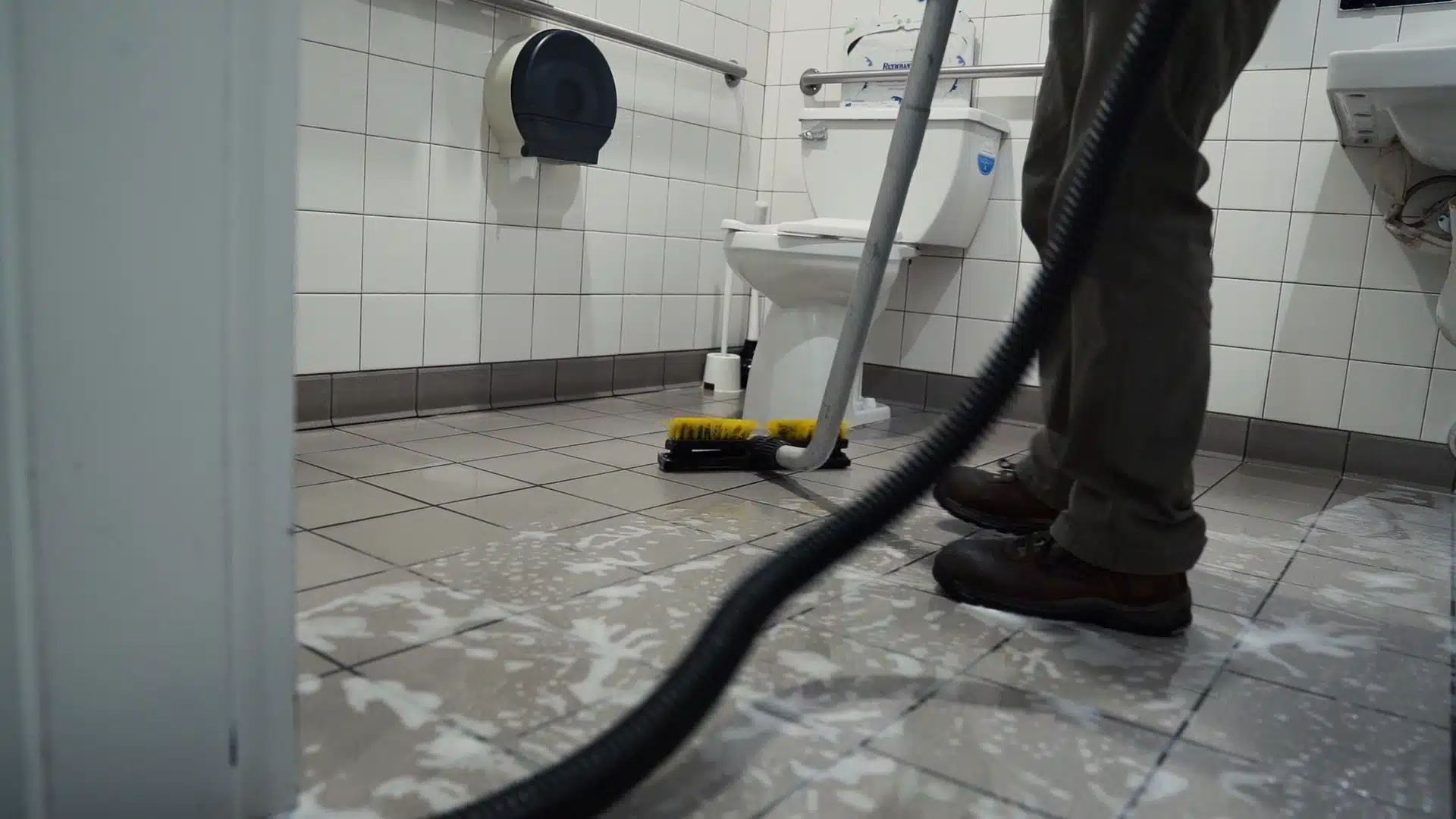
Their existing cleaning vendor treated the restrooms once a day, regardless of shift volume, which left the busiest hours uncovered. We audited their shift schedule and built a germicidal treatment routine timed to land right after their heaviest traffic windows instead of on a fixed morning schedule.
Our technicians also switched to a disinfectant with several days of residual protection, so the gap between visits stopped being a vulnerability. The facility manager told us the following season’s call-out pattern broke from the previous year’s trend, with no more clustering around their busiest production weeks.
How Does a Facility Cold and Flu Prevention Plan Compare to Standard Restroom Cleaning?
Facility managers regularly ask whether a dedicated facility cold and flu prevention plan justifies the cost over standard restroom cleaning. The table below breaks down the practical differences.
| Approach | Contact Point Reduction | Germ Kill Rate | Consistency Across Shifts | Cost Over Flu Season |
| Standard restroom cleaning | None (manual fixtures remain) | Moderate, surface-dependent | Low, tied to cleaning crew schedule | Lower upfront, higher in absenteeism costs |
| Touch-free equipment only | High | Unchanged (no active disinfection added) | High, since fixtures work continuously | Moderate, one-time installation cost |
| Germicidal treatment only | None | High, especially with residual protection | Moderate, depends on treatment frequency | Moderate, ongoing service cost |
| Combined touch-free and germicidal program | High | High, with residual protection | High, built around shift patterns | Predictable, bundled service cost |
The combined approach consistently outperforms either tactic on its own. Touch-free equipment stops new contamination from spreading between users, while germicidal treatment handles what’s already on the surface. Neither one covers the full gap alone, and a facility manager weighing a single-tactic fix usually finds the combined facility cold and flu prevention program delivers a better return once absenteeism costs enter the calculation.
How Can Fikes Help You Build a Restroom Prevention Program?
Coordinating touch-free installation and a germicidal treatment schedule across a shift-based facility takes more planning than most in-house maintenance teams have room for on top of daily production demands. That’s where Fikes restroom sanitation programs come in. We build them specifically for manufacturing environments, where restroom volume runs high and downtime for service work needs to stay low.
We start every engagement with a walkthrough of your restroom facilities, mapping fixture age, usage patterns across shifts, and any trouble spots your team has already flagged. From there, we design a touch-free equipment installation that fits your existing plumbing and electrical setup, so you avoid a costly remodel while still closing the contact-point gaps that drive cross-contamination. We handle sourcing and installation for every fixture, then keep it running with regular maintenance, so your team never has to track down replacement parts or troubleshoot a malfunctioning sensor mid-shift.
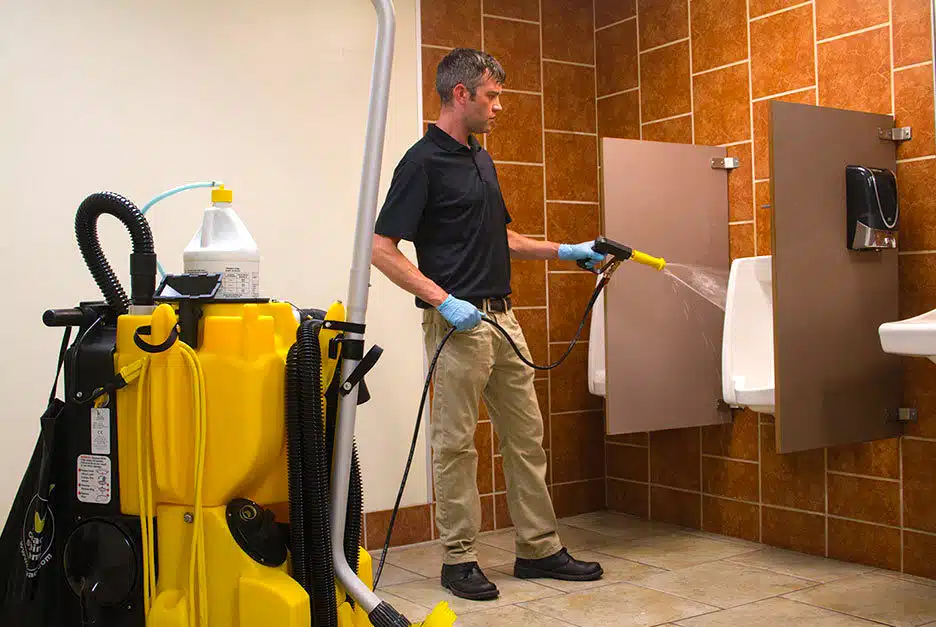
Alongside the equipment, we build a germicidal treatment schedule timed to your actual shift changes rather than a one-size-fits-all calendar. Our technicians use EPA-registered disinfectants with residual protection, and we adjust visit frequency as flu season activity rises or falls, so your restrooms stay protected during the weeks when risk runs highest. Because we already serve manufacturing clients across Washington, we understand the shift-driven usage patterns that make manufacturer restrooms different from a typical office setting, and we build every program around that reality instead of a generic template.
A typical program includes:
- Fixture assessment and installation covering every high-touch point in the restroom, from sinks to stall hardware
- Shift-timed germicidal treatments scheduled around your actual traffic patterns rather than a single daily pass
- Ongoing maintenance and replacement parts for touch-free equipment, so a malfunctioning sensor never sits unresolved
- Seasonal frequency adjustments that ramp treatment visits up as flu activity rises and scale back once the season eases
What Should You Do Before Flu Season Peaks?
Cold and flu prevention in a manufacturer restroom comes down to closing two gaps at once: the physical contact points that spread germs between workers, and the surface-level buildup that standard cleaning can’t fully address on a shift-based schedule.
Touch-free equipment handles the first gap, and a properly timed germicidal treatment routine handles the second. Together, they give you a facility cold and flue prevention system built for the volume you actually see, not the volume a generic cleaning schedule assumes.
Waiting until absenteeism spikes to act means you’re already behind. Getting your restrooms assessed and outfitted before flu season ramps up puts you ahead of the curve instead of reacting to it after the fact. We’re ready to walk your facility, map out where your risk points sit, and build a program that keeps your production line running through the season ahead.